
Storyblok agency for growth














Our awards




Results that count
Outstanding work for brands
Brands
From hidden champion to global player.
Ranking
1st place at the German Web Awards 2026.
Rating
Average rating from our clients.
Reviews
Customer reviews on ProvenExpert.

Visual Editor & live preview
Edit pages directly in the preview and combine approved bloks yourselves. This lets your team implement campaigns without sending every content change to development.

Content modeling
Plan products, services, and FAQs as linked content. Maintain them once and reuse them in suitable places.

AI for the editorial team
Prepare text drafts, translations, and metadata with AI. Your brand guidelines and editorial review set the direction.

Roles & workflows
Clearly assign drafting, review, and approval. This allows multiple teams to work reliably on your content.
Languages & markets
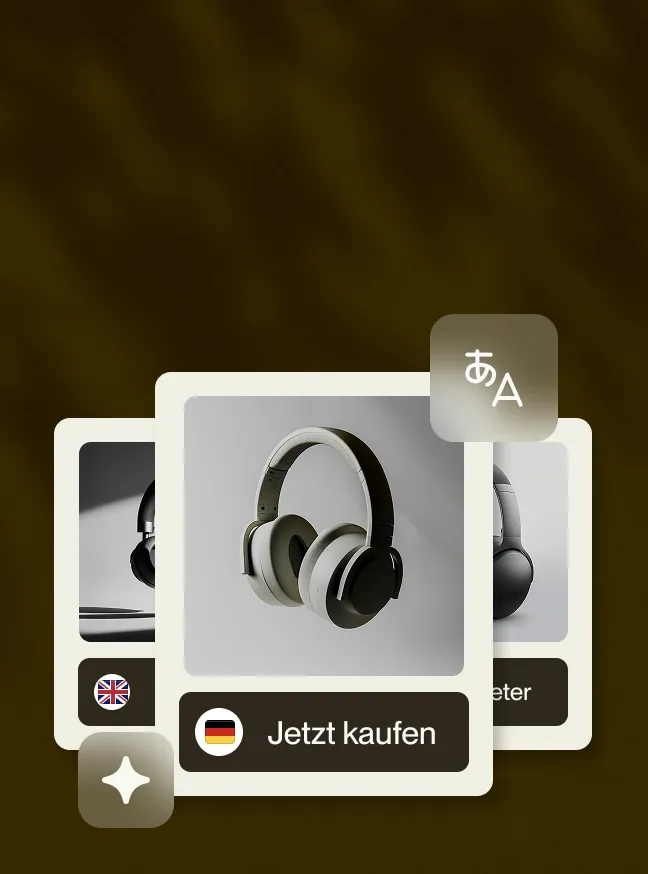
Translate shared content, add local offers in a targeted way. With a structure that fits your markets.
APIs & composable DXP
Storyblok for content, your CRM for contacts, the PIM for product data. We connect the systems into a digital experience with clear responsibilities.
Websites & platforms
Storyblok projects from our practice
Insights into published websites and current developments – from finance and industry to healthcare and hospitality.
Radiology Advanced
Explain teleradiology in an understandable way, structure services, and share knowledge. The Storyblok website connects company presence, journal, and academy.
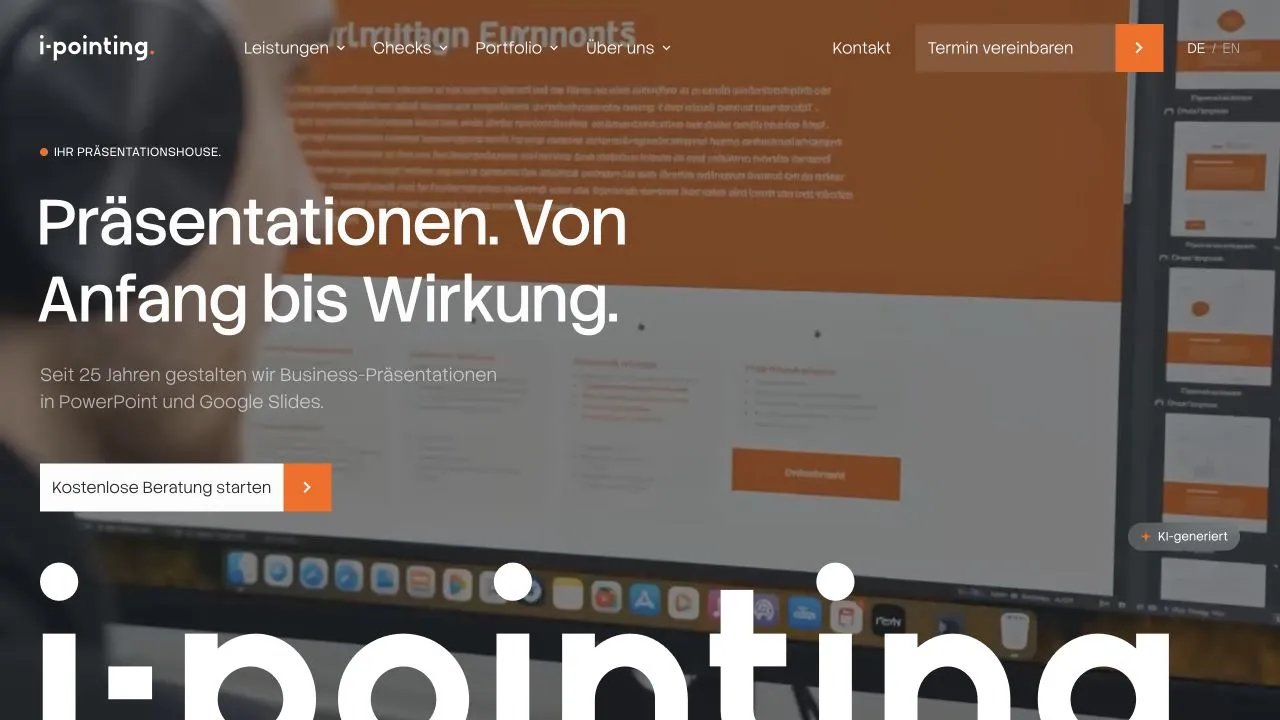
i-pointing
A presence for the presentation house from Munich. Services, portfolio, and consulting topics are combined in Storyblok into clear user guidance.
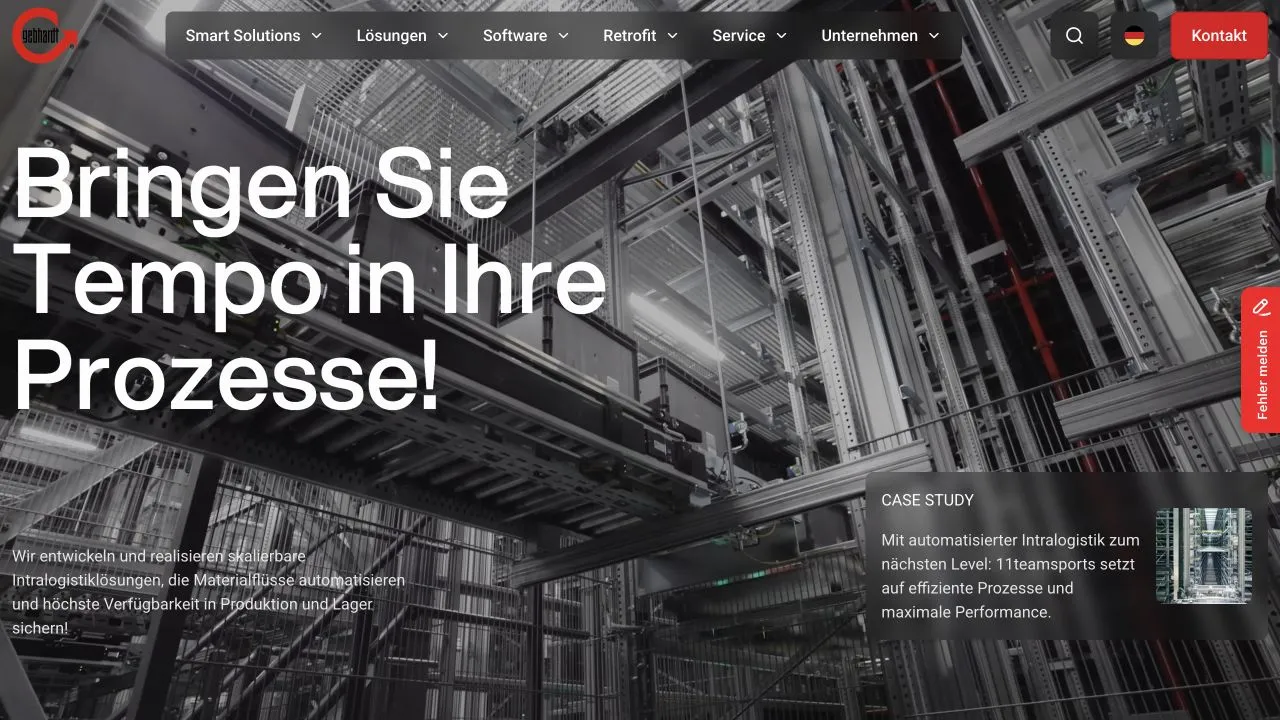
GEBHARDT
A multilingual platform for intralogistics. Solutions, products, industries, and references are organized as connected content in Storyblok.
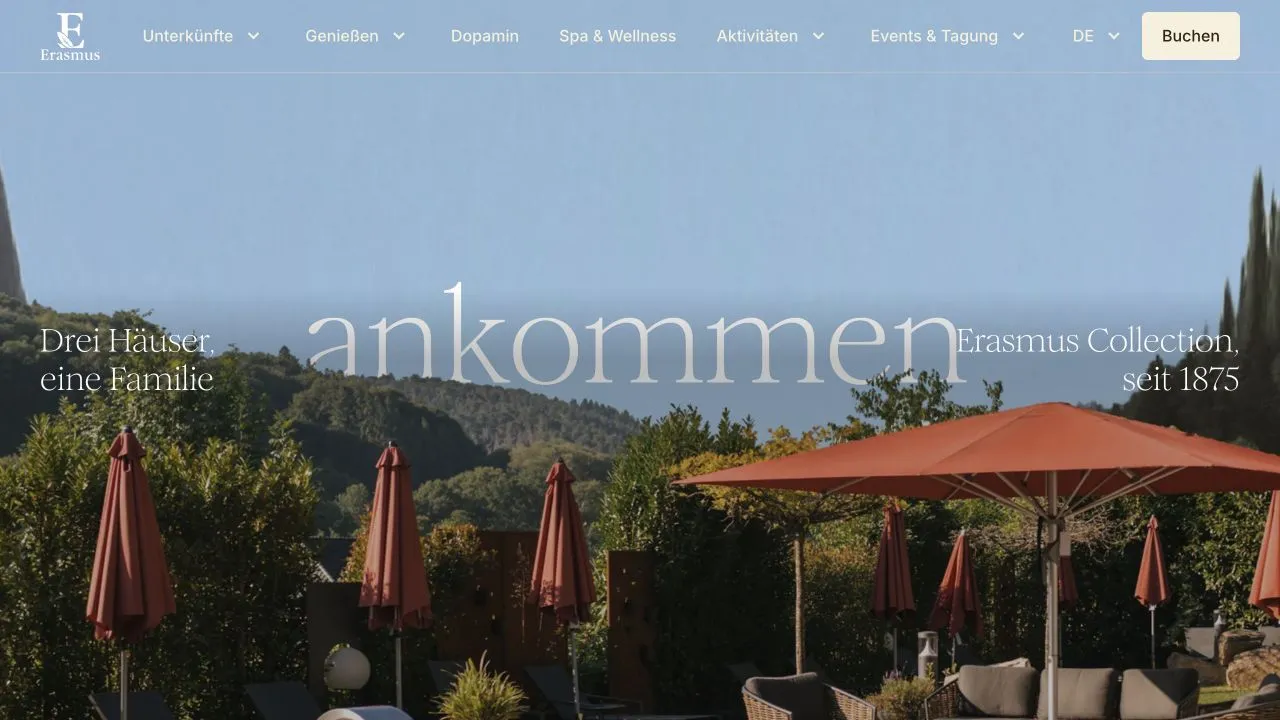
Hotel Erasmus
Three houses, wellness, cuisine, and offers in one world of experiences. Storyblok forms the editorial foundation for the new hotel presence.
More from our web design practice
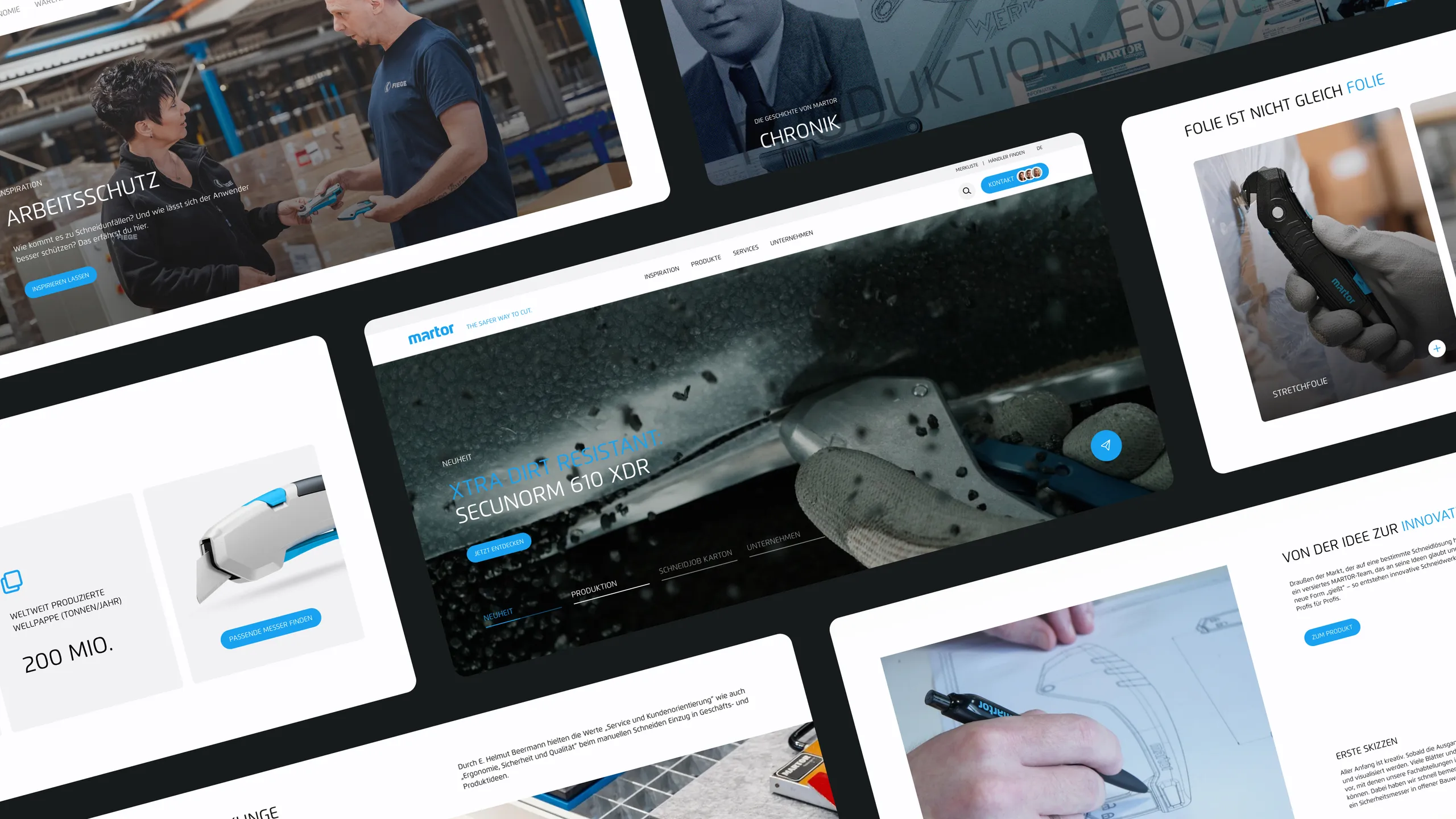
Storyblok potential check
What should your Storyblok website do better?
We examine three concrete tasks: publishing a campaign page, adding a new market, and using data from your systems. From this, we define the right components, interfaces, and priorities for your relaunch.

Your Storyblok partner
As a Storyblok partner, we connect brand, design, and development into websites that help your team achieve more.
Team
Strategy, design, development, and marketing under one roof in Wuppertal.
Experience
Over ten years of brands and websites for medium-sized businesses and corporations.
Awards
In seven independent award programs.
Storyblok manages content; the frontend determines how it appears on website, portal, or app. We distinguish page building blocks from central data records: a teaser has its own layout, a contact person is created once and referenced on several pages. Your editorial team combines prepared bloks in the Visual Editor. For new features, we develop the right components. This keeps maintenance simple while making content usable beyond individual pages.
Storyblok manages content; the frontend determines how it appears on website, portal, or app. We distinguish page building blocks from central data records: a teaser has its own layout, a contact person is created once and referenced on several pages. Your editorial team combines prepared bloks in the Visual Editor. For new features, we develop the right components. This keeps maintenance simple while making content usable beyond individual pages.
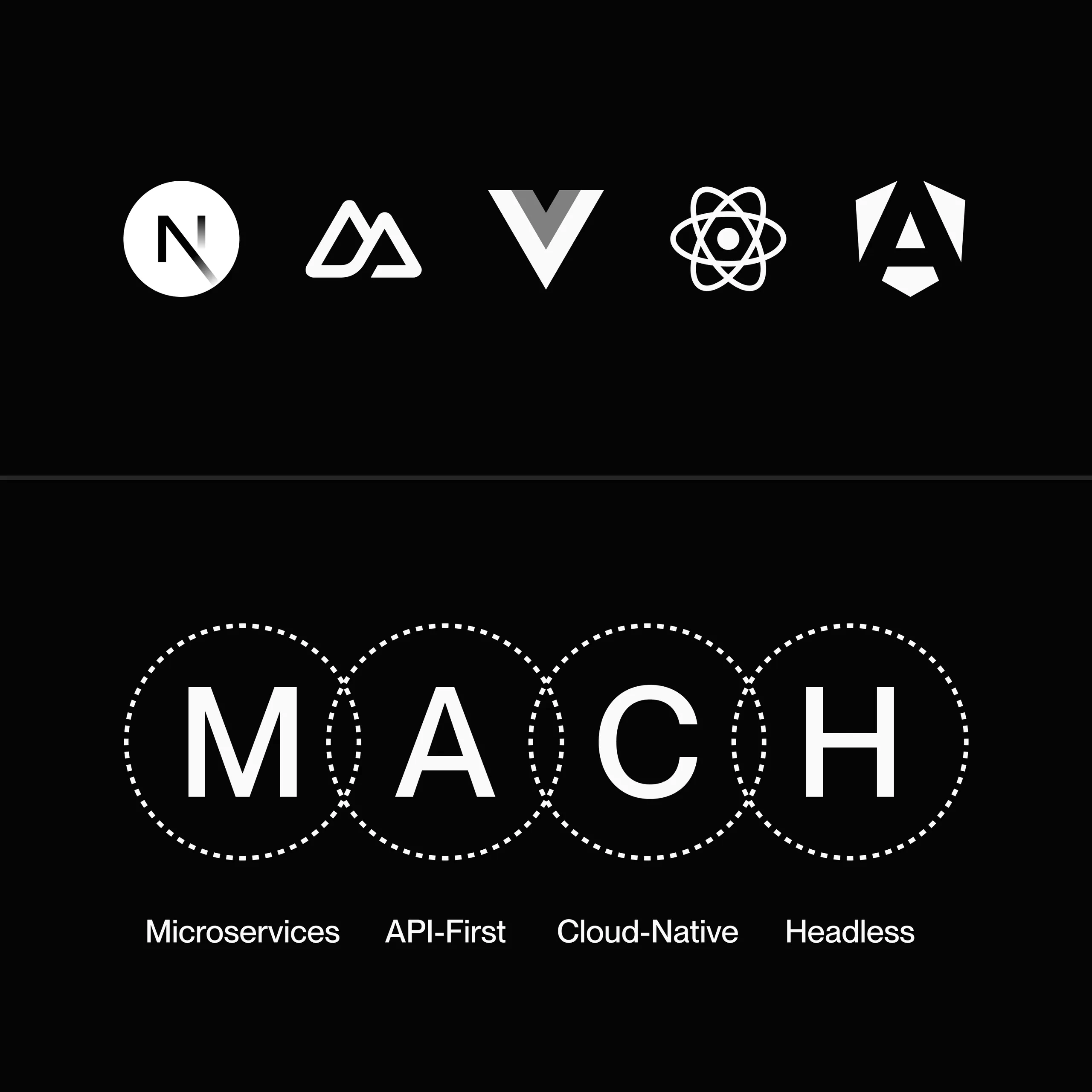
MACH stands for microservices, API-first, cloud-native, and headless. For your project, this means: separate responsibilities, define interfaces, and develop systems independently. Storyblok delivers content via API; for example, a search service and a CRM extend the platform. We clarify which source is leading, when data is updated, and what happens in case of a failure. Not every website needs many individual systems: the operational effort has to fit your team and the expected benefit.
MACH stands for microservices, API-first, cloud-native, and headless. For your project, this means: separate responsibilities, define interfaces, and develop systems independently. Storyblok delivers content via API; for example, a search service and a CRM extend the platform. We clarify which source is leading, when data is updated, and what happens in case of a failure. Not every website needs many individual systems: the operational effort has to fit your team and the expected benefit.
A digital experience platform connects content, data, and interactions along the customer journey. Storyblok can form the content layer for this; product data, search, forms, or commerce come from connected applications. At Sauren, editorial content meets current financial data from Anevis and an Astro frontend. For you, we plan similarly clear data paths: from product knowledge to the right landing page to the inquiry in the CRM. Which building blocks are needed is determined by your goals.
A digital experience platform connects content, data, and interactions along the customer journey. Storyblok can form the content layer for this; product data, search, forms, or commerce come from connected applications. At Sauren, editorial content meets current financial data from Anevis and an Astro frontend. For you, we plan similarly clear data paths: from product knowledge to the right landing page to the inquiry in the CRM. Which building blocks are needed is determined by your goals.

From building block to publication
Storyblok features that matter in everyday work
Bloks & references
Reusable layouts and centrally maintained content serve different tasks. We model both – for example, a product teaser that points to a shared product entry.
Assets & image service
Manage images and files centrally, maintain focus point and alt text. The image service delivers suitable sizes and formats; we integrate it for your end devices.
Versions & approvals
Track changes, review content, and prepare publications. We align roles and workflows with your team; we check the required plan in advance.
REST, GraphQL & webhooks
Retrieve content via APIs, pass on changes via webhooks. This allows, for example, search index or website delivery to react to new publications.
Multilingual structures
Field translations for identical pages, dedicated folders for different markets, separate spaces for independent environments. The structure follows your editorial model.
SEO fields & output
Title, description and canonical can be maintained; sitemap, hreflang and structured data are implemented in the frontend. Storyblok supplies the content; we ensure the correct output.
Storyblok AI
More space for good content. Less routine.
The Storyblok AI Suite can prepare text drafts, translations, SEO metadata and alt texts. With AI Branding, you define tone of voice and editorial rules. This way, your team starts with a suitable suggestion instead of an empty field.
Together we choose tasks where AI helps in everyday work and test them on your content. Expert review, approvals, model choice and available credits are part of the concept. The functions and limitations depend on the plan you booked and your setup.
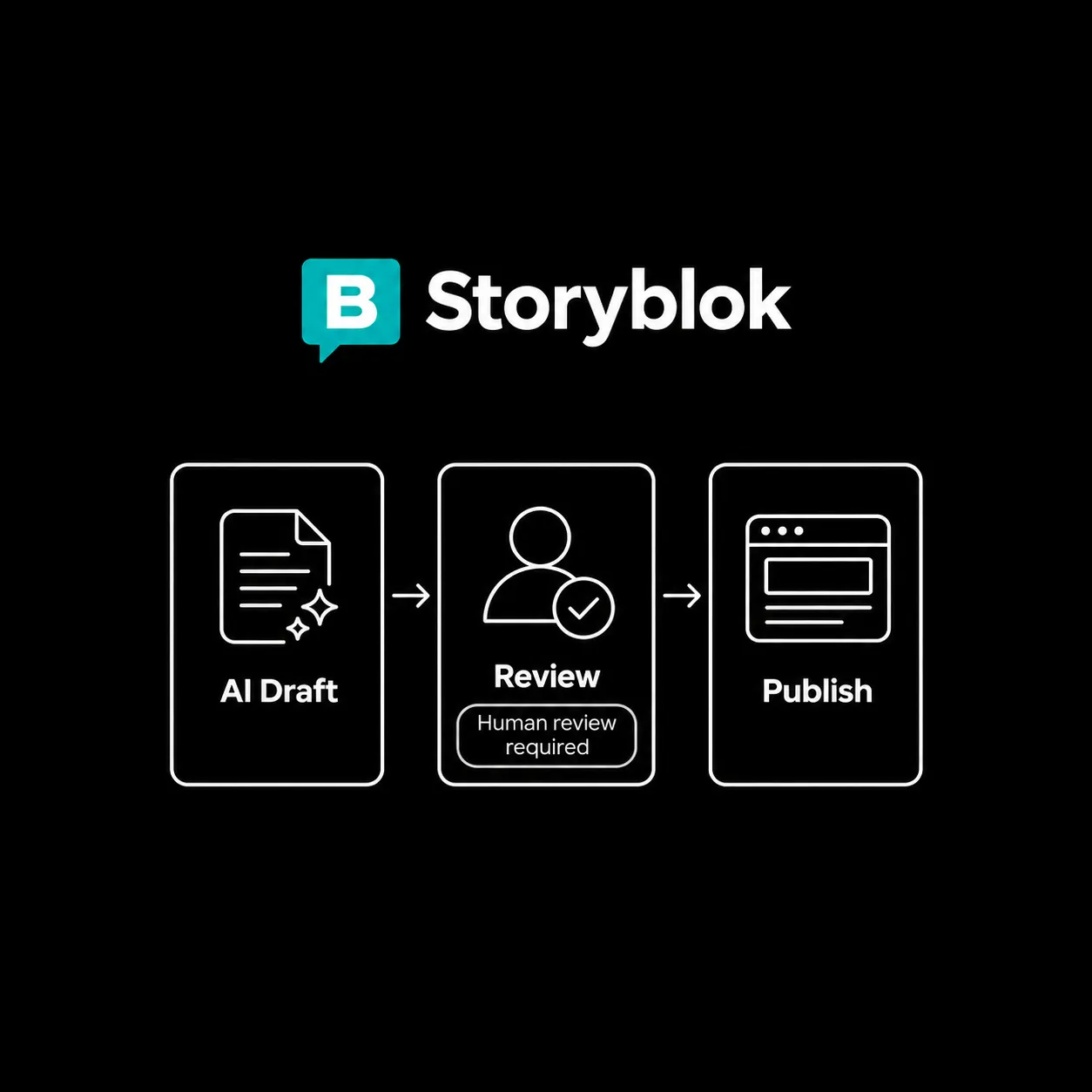
An international product launch needs more than translated words. We plan which fields AI is allowed to prepare, which technical terms apply and who reviews each language version. AI Branding supports requirements for brand voice. For images, alt texts can be suggested; for pages, SEO metadata. Our benchmark is the usable, approved version: we test typical tasks with your editorial team and record where human review remains necessary.
An international product launch needs more than translated words. We plan which fields AI is allowed to prepare, which technical terms apply and who reviews each language version. AI Branding supports requirements for brand voice. For images, alt texts can be suggested; for pages, SEO metadata. Our benchmark is the usable, approved version: we test typical tasks with your editorial team and record where human review remains necessary.

Storyblok Strata extends search with semantic retrieval: a query can return suitable content even if it uses different terms. This is useful, for example, for a knowledge search or as an information source for an AI assistant. Strata delivers relevant content; a finished answer is only generated by an additional application. We check data quality, access rights and freshness before this becomes a customer service. Availability depends on your plan.
Storyblok Strata extends search with semantic retrieval: a query can return suitable content even if it uses different terms. This is useful, for example, for a knowledge search or as an information source for an AI assistant. Strata delivers relevant content; a finished answer is only generated by an additional application. We check data quality, access rights and freshness before this becomes a customer service. Availability depends on your plan.

Via the Storyblok MCP server, compatible AI assistants can work with the CMS. The integrated Storyblok Agents additionally support tasks via chat and are currently in beta. Possible uses include content reviews, translation preparation or maintaining metadata. We start with a limited workflow, clear permissions and verifiable results. Actions that write data require appropriate approvals; how they are used depends on your setup.
Via the Storyblok MCP server, compatible AI assistants can work with the CMS. The integrated Storyblok Agents additionally support tasks via chat and are currently in beta. Possible uses include content reviews, translation preparation or maintaining metadata. We start with a limited workflow, clear permissions and verifiable results. Actions that write data require appropriate approvals; how they are used depends on your setup.
Services
Our services for Storyblok
We clarify what your Storyblok website should achieve and how your team will work with it. Goals, user questions, and system requirements create a shared direction. This gives you a reliable concept for brand, content, editorial work, and technology.
Learn more: Web design & strategy
We review your website, existing content and work in the CMS. User journeys, load times and editorial processes show where friction occurs and which foundations can be retained. You receive prioritized tasks for a well-founded decision about your Storyblok relaunch.
Target groups, business goals and brand promise: together we define what your website should achieve and how you assess progress. From this, clear priorities emerge for content, user guidance and the appropriate use of Storyblok.
We distinguish content types, pages and nested bloks. A contact person or product is created as its own entry and integrated via references; a text-image building block remains part of its page. Required fields, naming and allowed components ensure maintainability. We test the model with real content and typical changes by your team.
Storyblok, WordPress or another system: we compare your requirements for editorial work, integrations and operations. You receive a transparent recommendation that takes into account the feature set, existing systems and ongoing effort.
A realistic roadmap connects content, design, technology and approvals. We record existing pages, data sources and dependencies and break the relaunch into verifiable steps. Your team knows early on which decisions and content will be needed for the next milestone.
Who is allowed to create content, review it professionally, and publish it? We assign roles, folders, and responsibilities. For multiple brands or markets, we clarify which components apply jointly and where teams work independently. We plan individual roles and workflows based on the functions available in your plan.
We translate your brand into a distinctive digital experience with Storyblok. UX, UI design, and frontend are created together. We plan user guidance, loading time, and accessible operation from the start so visitors can move forward purposefully.
Learn more: Discover web design
We plan structure, content, and user guidance before the first layout is created. Sitemaps, wireframes, and clickable prototypes show early on whether visitors understand your offerings and can find the next step toward an inquiry.
An interface that carries your brand and works clearly and reliably across different devices. We design representative pages with real content and a component system your editors can use to build new pages consistently.
We choose the frontend based on your content, interactions, and operational requirements. For our own Storyblok presence, we use Astro. Preview, rendering, and caching are planned together: new content should reliably appear after publication while pages still load quickly. Storyblok and the frontend remain separate, but closely aligned parts.
We connect your components to the website preview in Storyblok. Texts and images can be edited in the context of the page. Together, we check whether structure and input fields are understandable in day-to-day editorial work.
Colors, typography, spacing, and interactions become reusable building blocks. We translate this design system into frontend components and matching CMS fields. This way, new Storyblok pages maintain the quality of your brand presence.
Contrast, keyboard operation, readable content, and understandable forms belong in the planning. We review the agreed requirements in the design and in the frontend and show your team how to maintain accessible content.
We plan content that answers questions and provides search systems with clear information. Technical SEO, structured data, and editorial rules interlock. Storyblok forms the maintainable foundation for your topics, pages, and languages.
Learn more: SEO & content
We analyze your website’s page structure, indexing, content, and loading time. From this, we derive priorities for the Storyblok relaunch and criteria we use together to review the implementation.
We model meta title, description, canonical, and indexing rules as maintainable fields. The frontend generates the HTML output from them and adds sitemap, hreflang, and suitable structured data. Before launch, we check real URLs, redirects, and language variants. A filled CMS field alone does not prove correct output.
With the same page structure, we use translations at field level. If markets need different offerings or pages, we consider separate folders; independent platforms may require separate spaces. On top of that come translated URLs, navigation, and responsibilities. AI can draft texts, while local teams review meaning and offering before approval.
Topics and content answer specific questions from your customers. We plan pages, relationships, and reuse in Storyblok so that individual texts form a clear path through your offering.
We structure offerings, service limits, FAQs, and references so statements can be clearly assigned and checked. CMS content must also appear understandable in the delivered HTML. With monitoring, for example using the OtterlyAI integration presented by Storyblok, you can track brand mentions and sources. From this we derive concrete content tasks; mentions themselves remain the responsibility of the search systems.
We agree on goals for visibility, user journeys, and inquiries. Clear reports show which content works and where further work is worthwhile.
Storyblok connects via APIs to your existing applications. We plan where data originates, who maintains it, and how it reaches the website. This allows content, product information, and contact processes to work together sensibly.
Learn more: Discuss Storyblok
For each connection, we define the primary data source, exchange format, and update cycle. Storyblok delivers editorial content via REST or GraphQL; webhooks can trigger further processes after publication. We take caching, faulty responses, and retries into account so a single service does not silently leave outdated content behind.
A form should generate a lead you can act on. We plan fields, responsibilities, and the handover to your CRM, such as HubSpot. Consent, validation, and feedback are part of the process. Storyblok manages the page and its content; contact handling and sales processes lie in the systems intended for them.
Product data can stay in the PIM, editorial stories in Storyblok, and cart plus checkout in the shop system. We link content via stable identifiers and plan how it is displayed in the frontend. We review in advance which integrations already exist and which will be developed individually, and record them in the scope of work.
A suitable search helps with large volumes of content. We design search fields, filters, and results around user tasks and connect the search to your website’s structured content.
Storyblok can deliver editorial content for a connected shop. We plan the transitions between brand, product information, and purchase process to fit your commerce platform.
Publications can trigger further processes, such as a website build. We plan triggers, feedback, and error handling for reliable updates.
We guide the switch to Storyblok and the work after the launch. Content, URLs, roles and processes are prepared together. With a clear handover, your editorial team can start confidently and then continue to develop the website in a targeted way.
More on this: Request relaunch
We capture content types, media, references, and languages from your current CMS. A mapping assigns them to the new Storyblok fields; a test import reveals missing data and unsuitable building blocks early on. Only after review do we plan the final move, how to handle changes during migration, and editorial acceptance.
Existing URLs, redirects and internal links are part of the migration plan. We check important target pages before the launch and then monitor possible errors in retrieval and indexing.
Drafts, reviews and publication-ready content are given clear responsibilities. For multilingual projects, we check separate approvals for each language. Versions help trace changes; we align more advanced workflows and release requirements with the plan. Testing includes an actual publication with all connected systems.
Your team works with real pages and content in Storyblok. We explain components, preview and publishing and record the most important processes in a way that is easy to understand for future work.
We agree on responsibilities for frontend, interfaces and CMS. Maintenance, reviews and support are based on your needs and are defined in advance as a separate scope of services.
We plan new pages, features and markets on the existing foundation. Shared priorities help align the website step by step with your business goals after launch.
Additional services
More for your Storyblok website





Brand strategy

Brand identity

Brand rollout

Brand growth
Employer branding

UX, UI & design

E-commerce
Platforms
APIs & automation

Content creation
Motion design

3D & CGI

Photography
Digital marketing

Ad creatives
GEO
Social ads

Copywriting
Storyblok as the content layer
What connects your composable DXP
Each system has a clear task. Together they create the path from the first information to the qualified inquiry.
Storyblok: content & editorial
Pages, campaigns and structured content are managed in Storyblok. The content model connects them through understandable relationships.
PIM & data sources
Product features or financial data remain in their leading system. Interfaces bring them together with editorial content.
Frontend: brand & user guidance
Astro or another suitable framework brings the experience to life. Rendering, navigation and loading behavior are specifically tailored to your presence.
Search & orientation
A search solution unlocks products and knowledge. We choose keyword search, filters or semantic finding based on the actual search tasks.
CRM & commerce
Inquiries go to the CRM; orders go to the shop system. We plan the handovers so that interest turns into a traceable next step.
Measurement & further development
Agreed metrics show inquiries, usage and editorial effort. On this basis, we prioritize additional components and integrations.
»Wir waren mit der Agentur Pechschwarz sehr zufrieden. Wir sind sicher, mit dieser langfristig einen guten E-Commerce- & Shop-Berater an unserer Seite zu haben. Eine starke Full-Service Agentur die tatsächlich alle Bereiche gut abdeckt, sowie durch Kreativität, persönliche Erreichbarkeit und ein gutes Preis-Leistungs-Verhältnis überzeugt.«





Ready for more?




Ready for more?
pechschwarz® × Storyblok
Your Storyblok partner. With practice and proof.
pechschwarz is listed in the official Storyblok partner directory. We combine platform knowledge, brand strategy, design and development in one team – from content structure to your website and its integrations.
Our own website also runs with Storyblok, Astro, Vercel, Typesense and HubSpot. Storyblok presents our presence and our project for Sauren as case studies. This lets you see how we bring content and technology together in practice.

Typical applications
Storyblok for your industry
From our work in these industries, we know the requirements. We plan these applications with Storyblok to suit your business model.
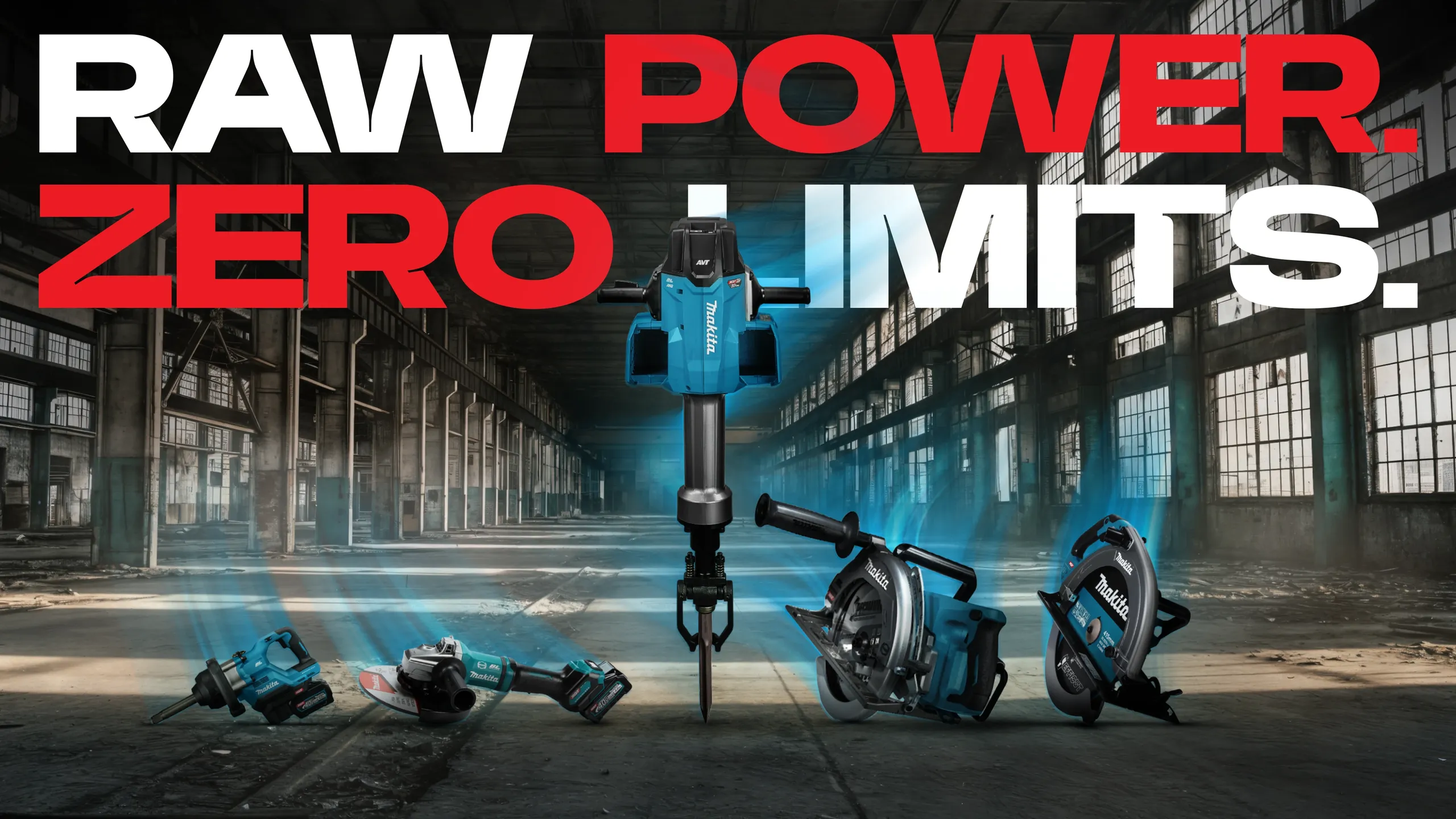
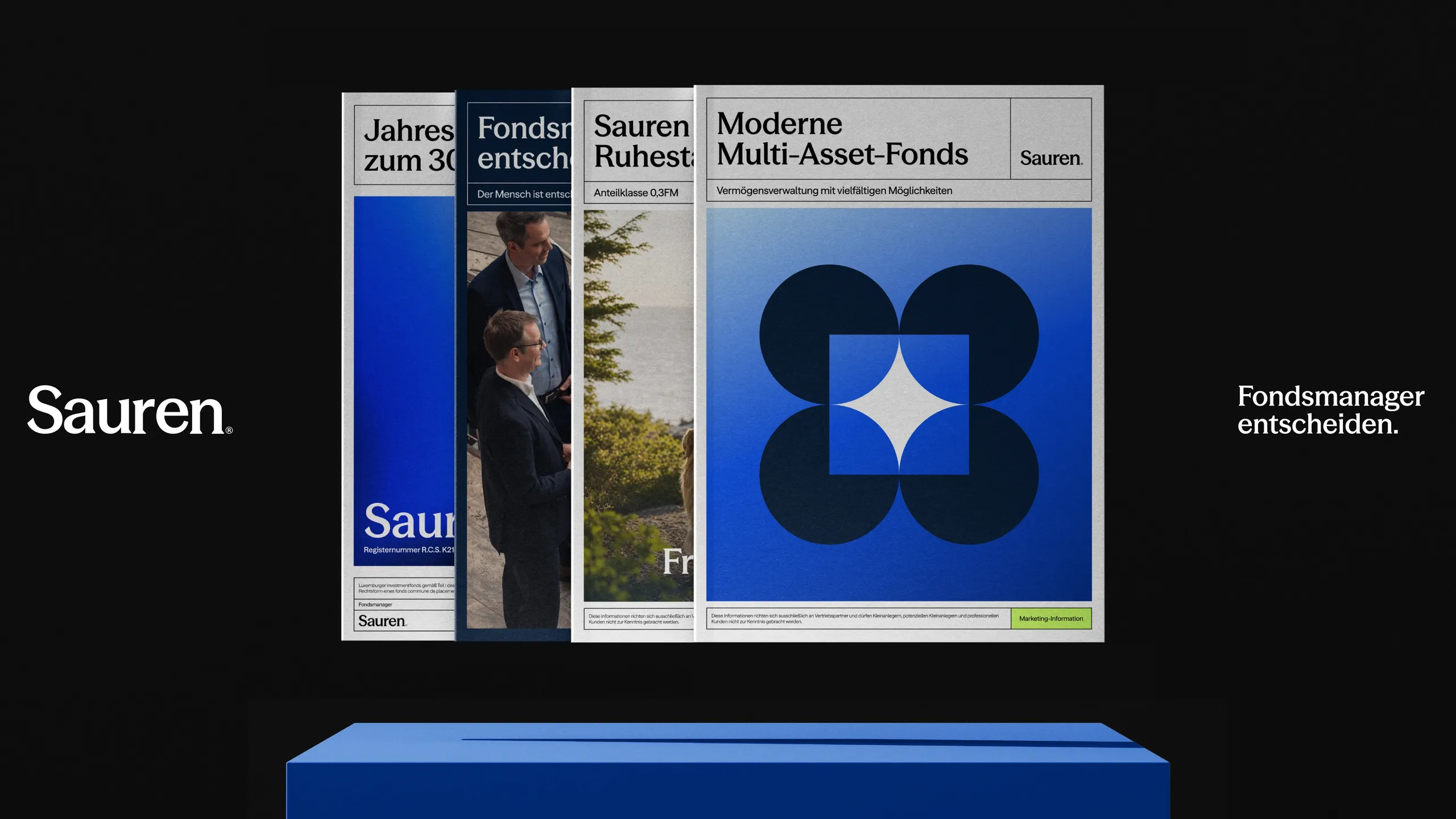
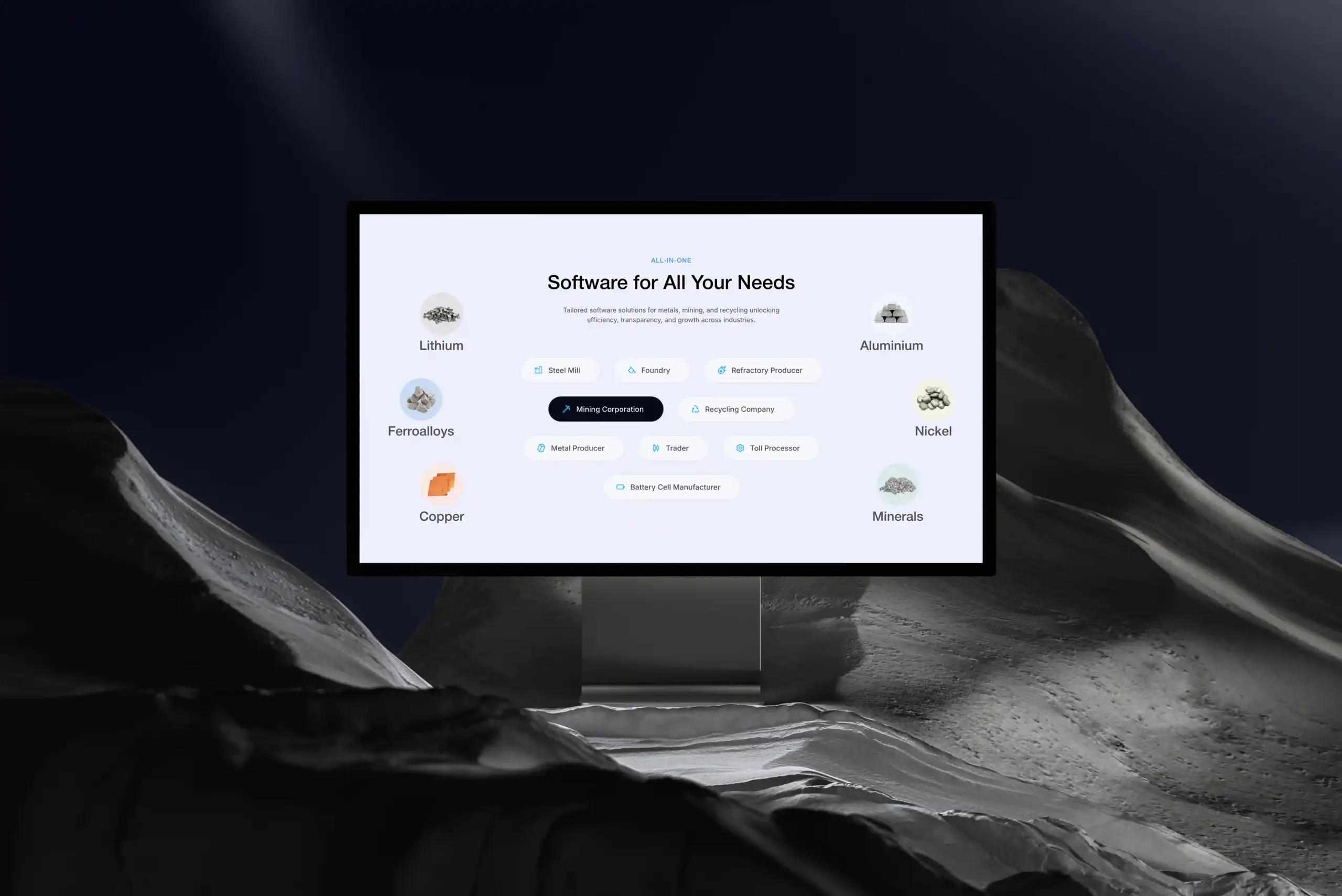
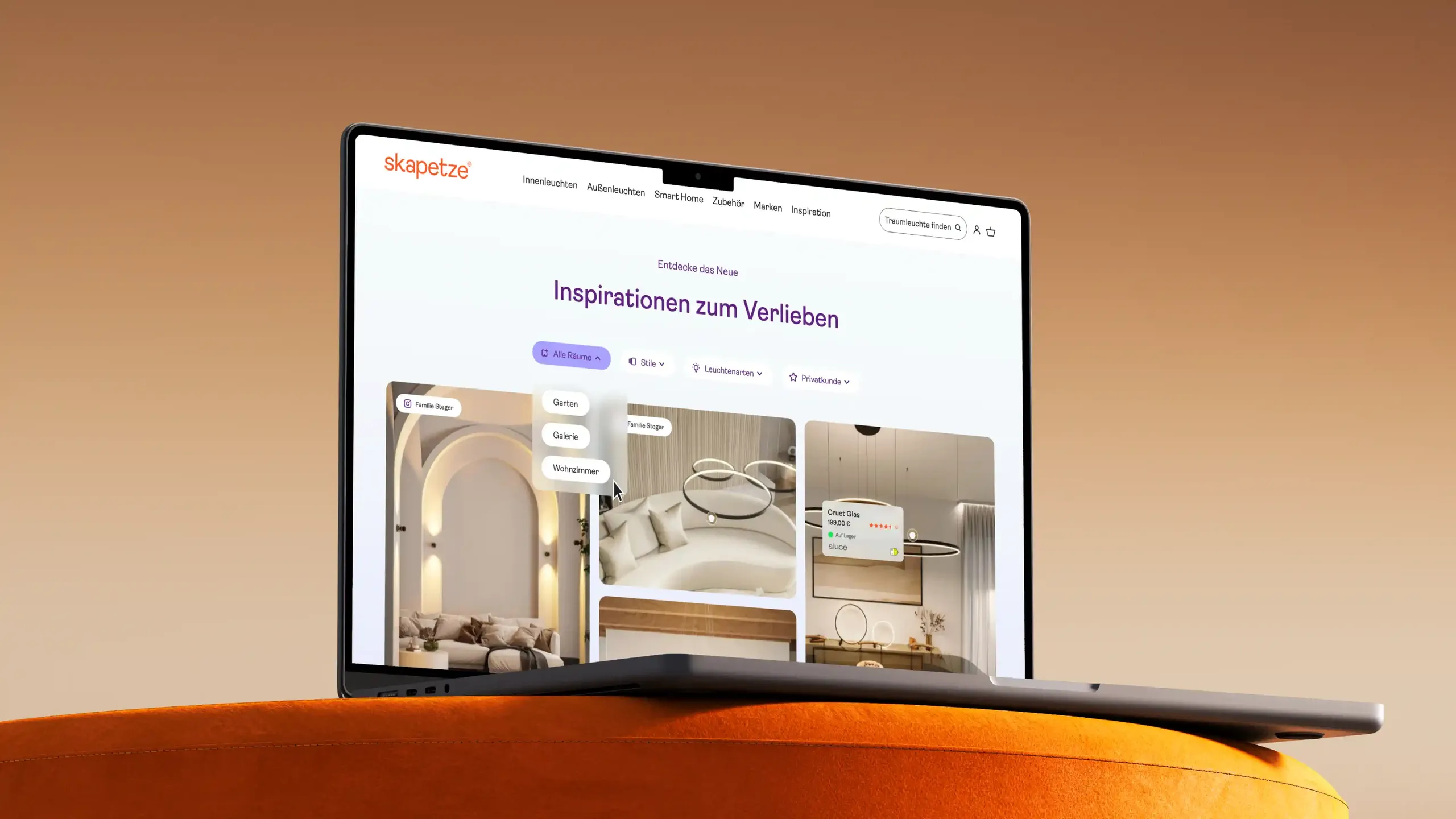
Comparison
Storyblok with pechschwarz
Comparison
Storyblok with pechschwarz
One joint team
Plan brand, Storyblok and frontend together.
Separate service providers
You choose specialists for CMS, design and frontend individually and coordinate fundamentals, interfaces and handovers.
Our process
How your Storyblok website is created
From the first workshop to launch: a dedicated team, clear decisions and shared goals. You know what will be created next.
Workshop & briefing
We clarify your goals, content, systems and editorial tasks. From this we create a shared briefing and priorities for your website.
Strategy & concept
We plan user journeys, content model and architecture. You see how brand, Storyblok and existing systems should work together in the future.
Design & content
Design, copy and visual language make your brand tangible. With real pages and prototypes, you align the direction before we develop it.
Implementation & quality
We develop frontend, components and integrations. We review content, preview and features together before release.
Launch & optimization
We support the launch, train your editorial team and hand over the website. Shared goals show which next steps will help your team.
Storyblok for your business goals
A new platform should solve a specific task: publish campaigns faster, qualify inquiries better or open up additional markets. To do this, we connect editorial, customer experience and system architecture. Storyblok is the content foundation; the benefits come from the right implementation.
Content modeling determines everyday work.
A reusable component is not yet centrally managed content. For a product page we therefore plan separately: the layout of the page, the product data, related downloads and recurring contacts. References connect this information. A change to the contact person can thus appear in several places without the editorial team having to search each page individually.
Together we test typical tasks: change a CTA, copy a campaign, add a product. The results show whether field names, relationships and allowed components are understandable. Only then does the model become the basis for further pages.
SEO needs CMS fields and a clean frontend.
Storyblok lets us model metadata and content to fit your website. We define which fields editors maintain and which values are generated automatically. These include title and description, canonical, indexing rules and local language variants. The frontend must output this information correctly; sitemap, redirects and structured data are part of the implementation.
Before launch we check the rendered page content, internal linking, key URLs and loading behavior. After go-live we monitor indexing and agreed metrics. The separation between CMS and frontend provides flexibility, but also requires clear responsibility for these tasks.
SEO starts with verifiable answers.
Anyone who wants to be found in search engines or AI answers needs clear information: What do you offer, for whom, under what conditions and with which proof? We plan services, use cases, authors, sources and updates as interconnected content. This allows your editorial team to maintain statements consistently and correct outdated information in a targeted way.
To achieve this, structured CMS data must also become accessible on the website. We review concrete search queries and monitor mentions and cited sources. AI features can support the work; a specific ranking or a recommendation by ChatGPT does not automatically result from this.
Multilingual capability is an architecture decision.
An identical page layout with translated text can be organized at field level. If offerings and pages differ between markets, separate folders can be useful. For independent platforms with separate teams, we consider separate spaces. We also plan navigation, URLs, relationships and responsibilities – before many language versions are created.
A relaunch needs a controlled transition.
We record existing content and URLs, assign them to the new model and check a test import. After that come references, media, language variants and redirects. For the switchover we define how ongoing editorial changes are adopted, who signs off and which errors will prevent a launch.
There are still tasks after the launch: monitoring interfaces, maintaining frontend dependencies and developing new modules. Project costs, Storyblok license, hosting and support are therefore planned separately. A small website without integrations can manage with a simpler setup; a composable DXP is worthwhile if the additional connections actually improve your day-to-day work.
News about Storyblok
Use the arrow keys to browse. Home shows the beginning, End the last posts. Use Tab to select post links.

FAQ
Common questions about your Storyblok website
Storyblok is particularly suitable for websites with recurring content, multiple languages and individual frontends. We review editorial work, interfaces and operations together. For a small project, a simpler system may be the more suitable choice.
The effort depends on the content model, design, scope of pages, migration and interfaces. We separate the project services from ongoing costs for Storyblok, hosting and support. After a joint review of your current setup, you receive an offer with clear phases and services. We check the required Storyblok plan based on your team and your requirements.
Yes. Your editorial team can edit content and prepared components in the Visual Editor. We set up fields and preview accordingly and train your team. We plan new functions or fundamentally different layouts as further development.
Yes. We review content, URLs and data sources, plan the new model and support the migration. We test redirects, preview and key pages before the joint launch.
Storyblok keeps content and SEO fields maintainable. We implement their output, structured data, sitemap, hreflang and redirects in the frontend. For GEO we add clear answers, reliable sources and a process for updating. AI SEO can provide suggestions; search engines and AI systems decide on rankings and mentions themselves.
In five steps: workshop & briefing, strategy & concept, design & content, implementation & quality, and launch & optimization. Each phase ends with concrete results on whose basis you decide.
Sauren and our own presence are listed as projects in the official Storyblok partner profile. For Sauren, the platform connects content with financial data; pechschwarz.com uses Storyblok and Astro. Both cases are linked in the projects section of this site.
Storyblok is the CMS and can form the content layer of a composable DXP. Suitable services are connected for search, product data, CRM or commerce. We clarify which functions you need and which are already in place in the architecture concept. A DXP is the interaction of these building blocks.
The AI Suite supports, among other things, text drafts, translations, SEO metadata and alt texts. AI Branding adds brand rules. Strata is used for semantic search; Storyblok Agents are currently a beta feature. We review plan, credits, permissions and approvals for your specific use case.
Storyblok provides core functions such as the Visual Editor, content model and asset management. Depending on the task, extensions come from the App Directory or are connected via APIs. We plan SEO output, forms, search and commerce in the overall system. A blanket plugin list therefore does not replace an architecture concept.
Let’s move your website forward with Storyblok.