
Payload agency for digital platforms



















Our awards




Results that count
Outstanding work for brands
Brands
From hidden champion to global player.
Ranking
1st place at the German Web Awards 2026.
Rating
Average rating from our clients.
Reviews
Customer reviews on ProvenExpert.

Collections & globals
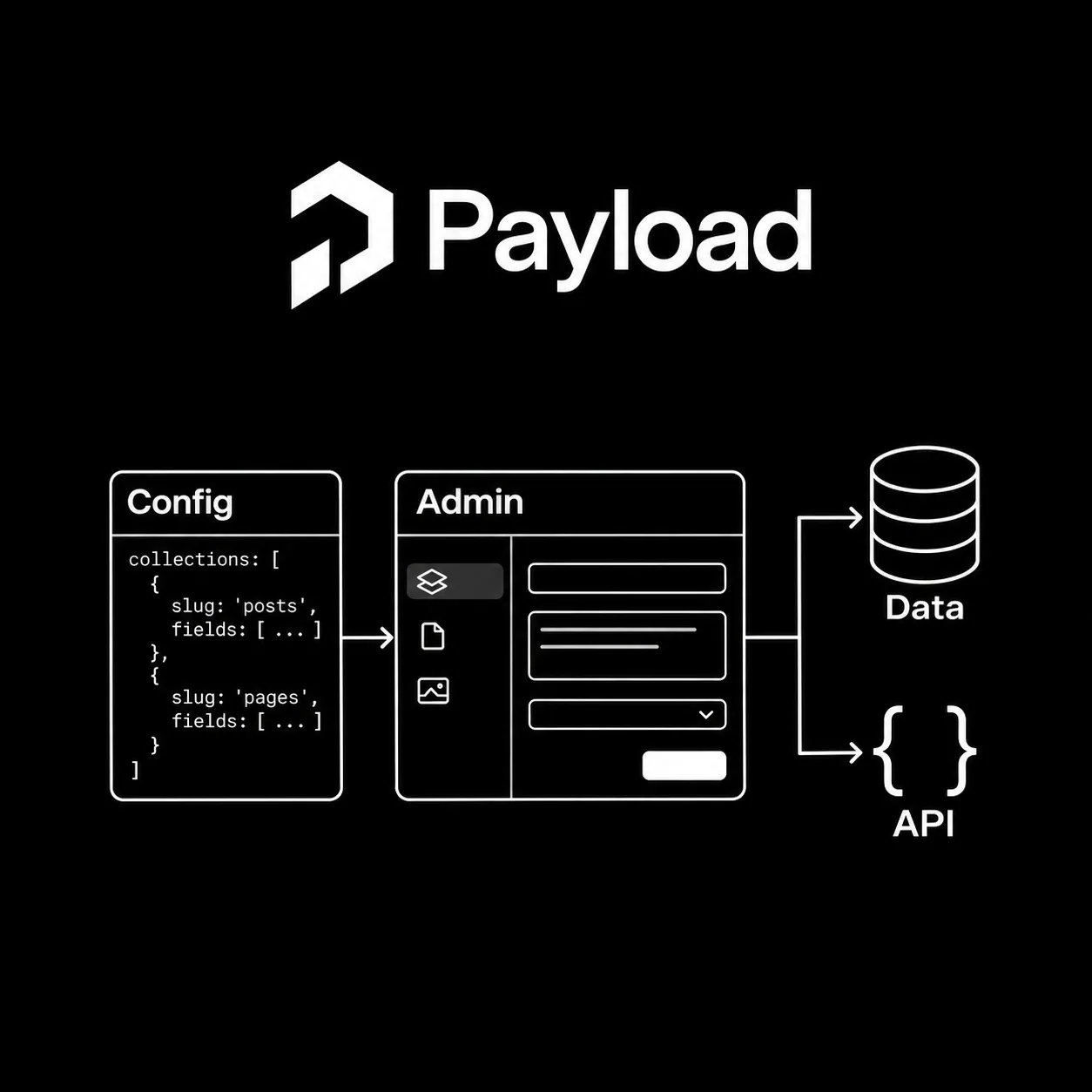
Purposefully model recurring data records and central settings. Fields, relationships and validations are defined in TypeScript.

Next.js & local API
Query content directly within the server application. REST and GraphQL complement the connection of further frontends or external systems.

Drafts & versions
Manage drafts and earlier states in a traceable way. Publication rights and preview are aligned with the editorial workflow.

Live preview
Check changes in the actual presentation. The preview is connected to your components and the chosen rendering.

Access control
Align access to collections, documents and fields with your roles. Custom endpoints and server-side calls must also follow these rules.

Database & hosting
Evaluate Postgres, MongoDB or SQLite based on the concrete use case. Operation, migrations, media and recovery are planned together.
Brand, design & development
Digital projects from our practice
Insights into our work for finance, health, industry and hospitality. The projects show our design and user guidance across different technologies.
Radiology Advanced
Explain teleradiology in an understandable way and structure offerings clearly. Corporate presence, journal and academy provide orientation for different target groups.

i-pointing
An appearance for the presentation house from Munich. Services, portfolio and consulting topics combine into clear paths through the offering.

GEBHARDT
Explain intralogistics for different markets and industries. Products, solutions and references form coherent entry points into complex topics.

Hotel Erasmus
Three properties, wellness and culinary delights in a shared experience world. Offers and inspiration lead guests from the first impression to the right stay.
More from our web design practice
Payload consulting
What should your platform do better with Payload?
Payload is a good fit for teams that want to closely connect CMS and custom application and design the technical foundation themselves. For a simple marketing website without in-house development resources, a more managed system can make more sense. We review real editorial tasks, existing data and the most important user paths. A prototype makes the decision tangible.

Your team for Payload
We connect Payload, brand and user guidance into a presence that supports your editorial team and advances your goals.
Team
Strategy, design, development, and marketing under one roof in Wuppertal.
Experience
Over ten years of brands and websites for medium-sized businesses and corporations.
Awards
In seven independent award programs.
Payload defines data models and behavior in code. Collections manage recurring data records, globals manage central content. Relationships, validation and custom hooks can represent business processes. We start with the tasks of users and editors: Which data belongs in the CMS, which in another system, and who is allowed to change it? From this a comprehensible admin interface emerges instead of an unstructured collection of tables.
Payload defines data models and behavior in code. Collections manage recurring data records, globals manage central content. Relationships, validation and custom hooks can represent business processes. We start with the tasks of users and editors: Which data belongs in the CMS, which in another system, and who is allowed to change it? From this a comprehensible admin interface emerges instead of an unstructured collection of tables.

Payload can be tightly integrated with a Next.js application. The local API enables server-side data access without an additional HTTP request. Further applications can use REST or GraphQL. We choose the paths deliberately and pay attention to permissions, caching and the separation of drafts and published content. A direct data query is only helpful if it also works correctly in the context of the respective user permission.
Payload can be tightly integrated with a Next.js application. The local API enables server-side data access without an additional HTTP request. Further applications can use REST or GraphQL. We choose the paths deliberately and pay attention to permissions, caching and the separation of drafts and published content. A direct data query is only helpful if it also works correctly in the context of the respective user permission.

Payload offers a lot of control over data, application and infrastructure. This means updates, database changes and recovery are part of the project. We plan database adapters, asset storage, environments and deployment early. For portals and multiple organizations, the separation of data and roles is explicitly tested. A flexible platform needs traceable boundaries so that it can grow reliably.
Payload offers a lot of control over data, application and infrastructure. This means updates, database changes and recovery are part of the project. We plan database adapters, asset storage, environments and deployment early. For portals and multiple organizations, the separation of data and roles is explicitly tested. A flexible platform needs traceable boundaries so that it can grow reliably.

From maintenance to operation
Payload features that matter in everyday work
Collections & globals
Specifically model recurring records and central settings. Fields, relationships and validations are defined in TypeScript.
Next.js & Local API
Query content directly within the server application. REST and GraphQL supplement the connection of additional frontends or external systems.
Drafts & Versions
Manage drafts and previous states in a traceable way. Publication rights and preview are aligned with the editorial workflow.
Live preview
Check changes in the actual presentation. The preview is connected to your components and the chosen rendering.
Access control
Align access to collections, documents and fields with your roles. Custom endpoints and server-side calls also have to comply with these rules.
Database & hosting
Evaluate Postgres, MongoDB or SQLite based on the concrete use case. Operation, migrations, assets and recovery are planned together.
Payload in practice
Your workflows. A fitting backend.
A customer portal needs different fields and permissions than a marketing website. Payload lets you tailor both to your tasks. We develop the data model and admin interface together and test with real content to see whether the operation remains understandable. Individual features are added where they provide a clear benefit.
AI features are planned as targeted integrations. For a knowledge search, sources, permissions and updates must be correct. For text drafts, we define suitable inputs, result fields and human approvals.
A hidden button does not protect any data. We check reading, editing and publishing along the actual access paths. With the Local API, access control is bypassed by default; user-related calls must deliberately enable the check and receive the correct user context. Custom endpoints, previews and media access are included in this review.
A hidden button does not protect any data. We check reading, editing and publishing along the actual access paths. With the Local API, access control is bypassed by default; user-related calls must deliberately enable the check and receive the correct user context. Custom endpoints, previews and media access are included in this review.

New required fields and relationships affect existing records. We plan migrations depending on the database adapter and test them with a representative data set. Frontend and backend are rolled out in a suitable order. A backup alone is not enough: the recovery path and how to handle content changed in the meantime must also be clear.
New required fields and relationships affect existing records. We plan migrations depending on the database adapter and test them with a representative data set. Frontend and backend are rolled out in a suitable order. A backup alone is not enough: the recovery path and how to handle content changed in the meantime must also be clear.

An AI search or editorial assistant can be integrated via additional services. Decisive factors are allowed sources, access rights and the freshness of the knowledge. We test answers with typical questions and define when the application should not deliver a definitive answer. A model only receives the data that is released for the intended use case.
An AI search or editorial assistant can be integrated via additional services. Decisive factors are allowed sources, access rights and the freshness of the knowledge. We test answers with typical questions and define when the application should not deliver a definitive answer. A model only receives the data that is released for the intended use case.

Our services for Payload
From platform to outcome
A robust plan starts with your workflows.
We record important pages, target groups and tasks in the team. Requests, conversions and maintenance effort are considered separately. From this we derive priorities against which you can evaluate the success of the project.
Payload suits teams that want to tightly integrate CMS and custom application and design the technical foundation themselves. For a simple marketing website without in-house development resources, a more managed system can make more sense.
Collections represent recurring records, globals central settings. Relationships, blocks and field validation are defined to fit the content. Editorial fields and internal application data receive clear, comprehensible boundaries.
Payload defines data models and behavior in code. Collections manage recurring records, globals central content. Relationships, validation and custom hooks can reflect business workflows. We start from the tasks of users and editors: Which data belongs in the CMS, which in another system, and who is allowed to change it? This results in an understandable admin interface instead of an unstructured collection of tables.
Scope is determined by collections, custom logic, portal permissions, frontend, migration and infrastructure. On top of that come the required licenses, hosting and support. We separate one-off implementation from ongoing effort and compare the planned growth over several years.
We determine who prepares content, reviews it professionally and publishes it. A test with a real page shows which permissions and guidance are needed. New workflows are tested together with your editorial team.
Your brand becomes an operable system.
We guide from the specific question to the right offering. Navigation, search, and contact options are aligned with your target groups. Prototypes make these paths verifiable before development.
Colors, typography, components, and states are designed together. Your editorial team receives reusable elements with clear room for maneuver. This way, new pages remain part of the same brand.
Payload can be tightly integrated with a Next.js application. The Local API enables server-side data access without an additional HTTP request. Other applications can use REST or GraphQL. We choose the paths deliberately and pay attention to permissions, caching, and the separation of drafts and published content. A direct data query is only helpful if it also works correctly in the context of the respective user permissions.
We review menus, forms, content order, and media on small screens. Touch targets, legible text, and short paths are part of the concept. The mobile version is approved using real content.
Keyboard operation, focus, contrast, labels, and understandable error messages are reviewed at the component level. The editorial team also receives rules for headings, links, and alternative texts.
Drafts, versions, and live preview are set up for the actual page types. Editors see drafts in the frontend, while public access only receives approved content. The preview requires a deliberate integration.
Structure content so that people can find answers.
We assign search queries to your services and products. Every important page gets its own task, suitable evidence, and a next step. Similar terms do not automatically lead to several almost identical pages.
Metadata can be maintained via suitable fields and the SEO plugin. Their output, canonicals, sitemaps, and structured data are implemented in the frontend. We pay particular attention to dynamic routes, language variants, and drafts that can be reached unintentionally.
Localized fields and fallbacks are defined according to your markets. Field translation must be distinguished from a full multi-brand or multi-tenant architecture. URLs, approvals, and access need a shared concept.
Texts, images, and videos arise from your actual offering. We clarify statements, responsibilities, and approvals early. Content is prepared based on real page formats and reviewed in the CMS.
Services, technical terms, use cases, and sources are explained in a traceable way. For AI search, the same statements require accessible pages and reliable evidence. Mentions and cited sources can be monitored; a recommendation by an AI system is not guaranteed.
We agree on events along the inquiry or purchase process. Analysis and consents are aligned with your setup. Decisive are actionable contacts and completions, supplemented by usage and editorial effort.
Data should be maintained in the right place.
Local API, REST, and GraphQL are chosen according to the call context. Hooks can connect business processes. External data sources remain leading wherever they are maintained; error handling and repeated processing are explicitly planned.
We plan required fields, validation, responsibilities, and the handover into the CRM. A successful submission must arrive in the target system. Error cases and feedback to users are co-tested.
Payload can supply editorial product content and individual commerce interfaces. Payments, orders, taxes, and inventory require suitable services or a deliberately developed implementation. A CMS data model alone is not a complete shop operation.
Search, filters, and sorting start from the users’ tasks. We test typical terms, synonyms, and empty result lists. Updates and access rights are part of the concept for a connected search solution.
AI features are planned as targeted integrations. For a knowledge search, sources, permissions, and updating must be correct. For text drafts, we define suitable inputs, result fields, and human approvals.
For every connection, we define responsible persons, updating, and error handling. Logs and notifications help detect aborted transfers. Repetitions must not create duplicate records or orders.
The transition is part of the project.
We map data, media, and relationships to the new schema. A trial import tests IDs, localized fields, and validation. Database migrations, redirects, and the final content alignment are coordinated with the release.
We assign existing URLs to specific new targets. Important content remains accessible; unnecessary redirect chains are avoided. After the switch, we review status codes, canonicals, internal links, and the sitemap.
We review editorial tasks, responsive display, search, and forms using real content. Central integrations are tested including error cases. Before go-live, responsibilities, acceptance criteria, and a rollback plan are defined.
Your team works on its own content during training. Field help, short guides, and responsibilities remain available after launch. New components are planned as further development.
Payload, Next.js, dependencies, and database are maintained together. We plan releases, monitoring, backups, and recovery. Custom hooks and APIs in particular require traceable tests and documented responsibility.
After launch, we prioritize based on agreed metrics and your feedback. New features receive a clear goal and verifiable acceptance. This keeps the platform aligned with your business.
Complementary services
More impact for your digital presence







Brand strategy

Brand identity

Brand rollout

Brand Growth

Employer Branding

UX, UI & Design

E-Commerce

Platforms
APIs & Automation

Content Creation

Motion Design

3D & CGI

Photography

Digital Marketing

Ad Creatives

GEO

Social Ads

Copywriting
Architecture & data
Payload in interaction with your systems
A Digital Experience Platform emerges through suitable building blocks and clear data ownership. We only add what supports your user journeys and workflows.
Payload
Collections map recurring data records, globals map central settings. Relationships, blocks, and field validation are defined to fit the content. Editorial fields and internal application data receive clear, comprehensible boundaries.
Presentation & editing
Drafts, versions, and live preview are set up for the actual page types. Editors see drafts in the frontend, while public access only receives approved content. The preview requires a deliberate integration.
Data & interfaces
Local API, REST, and GraphQL are chosen according to the call context. Hooks can connect business workflows. External data sources remain the primary system wherever they are maintained; error handling and repeated processing are explicitly planned.
Offers & transactions
Payload can supply editorial product content and individual commerce interfaces. Payments, orders, taxes, and inventory require suitable services or a deliberately developed implementation. A CMS data model alone is not a complete shop operation.
Languages & markets
Localized fields and fallbacks are defined according to your markets. Field translation is different from a full multi-brand or multi-tenant architecture. URLs, approvals, and access need a shared concept.
Operations & further development
Payload, Next.js, dependencies, and database are managed together. We plan releases, monitoring, backups, and recovery. Custom hooks and APIs in particular require transparent tests and clearly documented responsibility.
»Wir waren mit der Agentur Pechschwarz sehr zufrieden. Wir sind sicher, mit dieser langfristig einen guten E-Commerce- & Shop-Berater an unserer Seite zu haben. Eine starke Full-Service Agentur die tatsächlich alle Bereiche gut abdeckt, sowie durch Kreativität, persönliche Erreichbarkeit und ein gutes Preis-Leistungs-Verhältnis überzeugt.«





Ready for more?




Ready for more?
pechschwarz®
Brand, design, and technology. One joint team.
A platform alone does not yet solve a task. We connect brand strategy, user guidance, content, and development – with fixed points of contact and clear decisions in every phase.
For your Payload project, we combine strategy and design with a transparent implementation. You evaluate real content models, prototypes, and user journeys. Editorial handover, interfaces, and ongoing support are planned together.

Typical use cases
Payload for your requirements
Payload becomes interesting where content and individual product functions come together.




Which solution fits?
A platform needs clear ownership.
Which solution fits?
A platform needs clear ownership.
Payload with pechschwarz®
Content, design and operations are developed together.
Implementation without a shared plan
Unclear rules increase the effort needed to maintain and extend the platform.
Our process
This is how your Payload project is created
From the first workshop to launch: a dedicated team, clear decisions and shared goals. You know what will be created next.
Goals & existing setup
We review target groups, existing content, and your day-to-day maintenance. Payload suits teams that want to closely connect CMS and custom application and design the technical foundation themselves. For a simple marketing website without in-house development resources, a more managed system can be more suitable.
Concept & architecture
Payload defines data models and behavior in code. Collections manage recurring data records, globals central content. Relationships, validation, and custom hooks can represent business workflows. We start from the tasks of users and editors: Which data belongs in the CMS, which in another system, and who is allowed to change it? From this, an understandable admin interface emerges instead of an unstructured collection of tables.
Design & editing
We design real pages, content, and interactions. Your team tests the maintenance before the system is expanded to further page types.
Implementation & transition
We map data, media, and relationships to the new schema. A test import checks IDs, localized fields, and validation. Database migrations, redirects, and the final content alignment are coordinated with the release.
Launch & further development
Acceptance, training and transition interlock. After launch, we prioritize improvements based on your goals and feedback.
Payload is an architectural decision
Payload suits teams that want to closely connect CMS and custom application and want to shape the technical foundation themselves. For a simple marketing website without in-house development resources, a more managed system can be more appropriate.
Code-based models make coordinated development easier, but require clear responsibilities. Therefore, evaluate not only license costs, but also database, hosting, releases and editorial workflows. A concrete portal or website prototype shows whether the freedom gained justifies the additional operations effort.
Plan content, data and approvals together
Collections map recurring data sets, globals map central settings. Relationships, blocks and field validation are defined to match the content. Editorial fields and internal application data receive clear boundaries.
Local API, REST and GraphQL are chosen according to the call context. Hooks can connect business processes. External data sources remain leading where they are maintained; error handling and repeated processing are explicitly planned.
Ongoing operations are part of the decision
Payload, Next.js, dependencies and database are maintained together. We plan releases, monitoring, backups and restoration. Custom hooks and APIs in particular require transparent tests and clearly documented responsibility.
Scope is defined by collections, custom logic, portal permissions, frontend, migration and infrastructure. In addition, required licenses, hosting and maintenance are included. We separate one-off implementation from ongoing effort and compare the planned growth over several years.
Knowledge for your digital platform
Use the arrow keys to browse. Home shows the beginning, End the last posts. Use Tab to select post links.




FAQ
Questions about your Payload project
Payload can manage content and at the same time form the basis of custom applications. The data model, user roles and operational requirements determine which features belong in the project.
Payload’s current architecture is closely tied to Next.js. External frontends can use content via REST or GraphQL. The choice is made based on the application, preview needs and operations.
Official adapters support Postgres, MongoDB and SQLite. The choice depends on data model, load, hosting and the required migration and operational processes.
Yes. Versions, drafts and preview are set up for this purpose. Permissions and the connection to the frontend must reliably separate draft content from the public output.
Even with an open software base, there is effort for hosting, updates, database and further development. We make this responsibility visible before the decision is made.
Scope is defined by collections, custom logic, portal permissions, frontend, migration and infrastructure. In addition, required licenses, hosting and maintenance are included. We separate one-off implementation from ongoing effort and compare the planned growth over several years.
We assign data, media and relationships to the new schema. A test import validates IDs, localized fields and validation. Database migrations, redirects and the final content alignment are coordinated with the release.
Payload, Next.js, dependencies and database are maintained together. We plan releases, monitoring, backups and restoration. Custom hooks and APIs in particular require transparent tests and clearly documented responsibility.
Let’s achieve more with Payload.