
Shopware agency for sales growth




















Our awards




Results that count
Outstanding work for brands
Brands
From hidden champion to global player.
Ranking
1st place at the German Web Awards 2026.
Rating
Average rating from our clients.
Reviews
Customer reviews on ProvenExpert.

Experience worlds
Combine content and products in reusable layouts. Your editorial team can consistently develop campaigns and consulting further.

Rule Builder
Define business rules for specific conditions. Prices, shipping and further processes are tested against real order cases.

Flow Builder
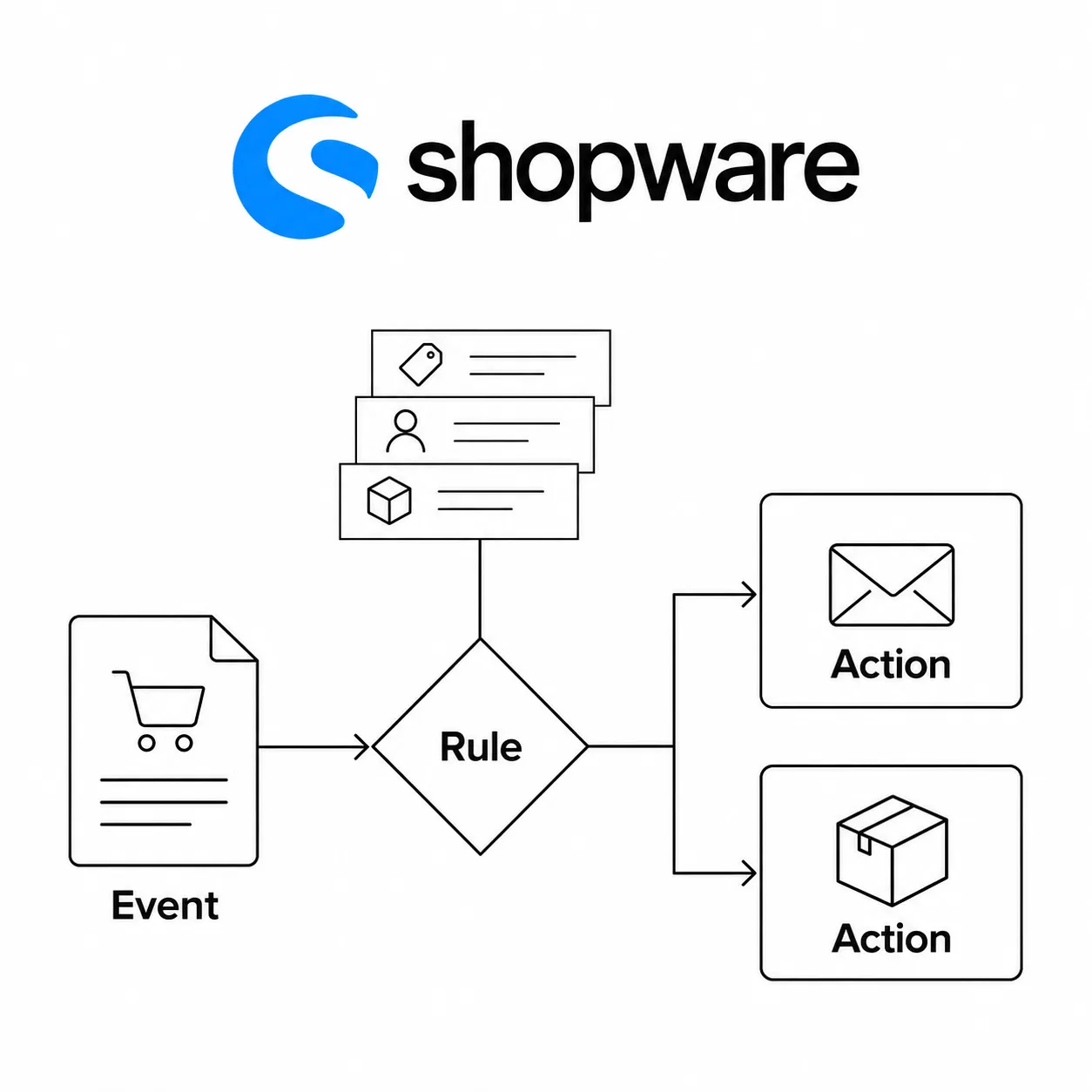
Connect events with conditions and actions. Order communication and internal processes receive traceable rules.

Sales channels
Consciously structure B2C, B2B and different markets. Catalogues, languages and areas of responsibility are planned together.

Store API & Admin API
Connect shopping experience and data management appropriately. ERP, PIM and additional applications receive clear interfaces.

B2B & AI extensions
Check additional functions against the concrete Shopware package. Automation is linked to approvals and data quality.
Brand, design & development
Digital projects from our practice
Insights into our work for finance, healthcare, industry and hospitality. The projects show our design and user guidance across different technologies.
Radiology Advanced
Explain teleradiology in an understandable way and clearly structure offerings. Corporate presence, journal and academy provide orientation for different target groups.

i-pointing
A presence for the presentation house from Munich. Services, portfolio and consulting topics combine into clear paths through the offering.
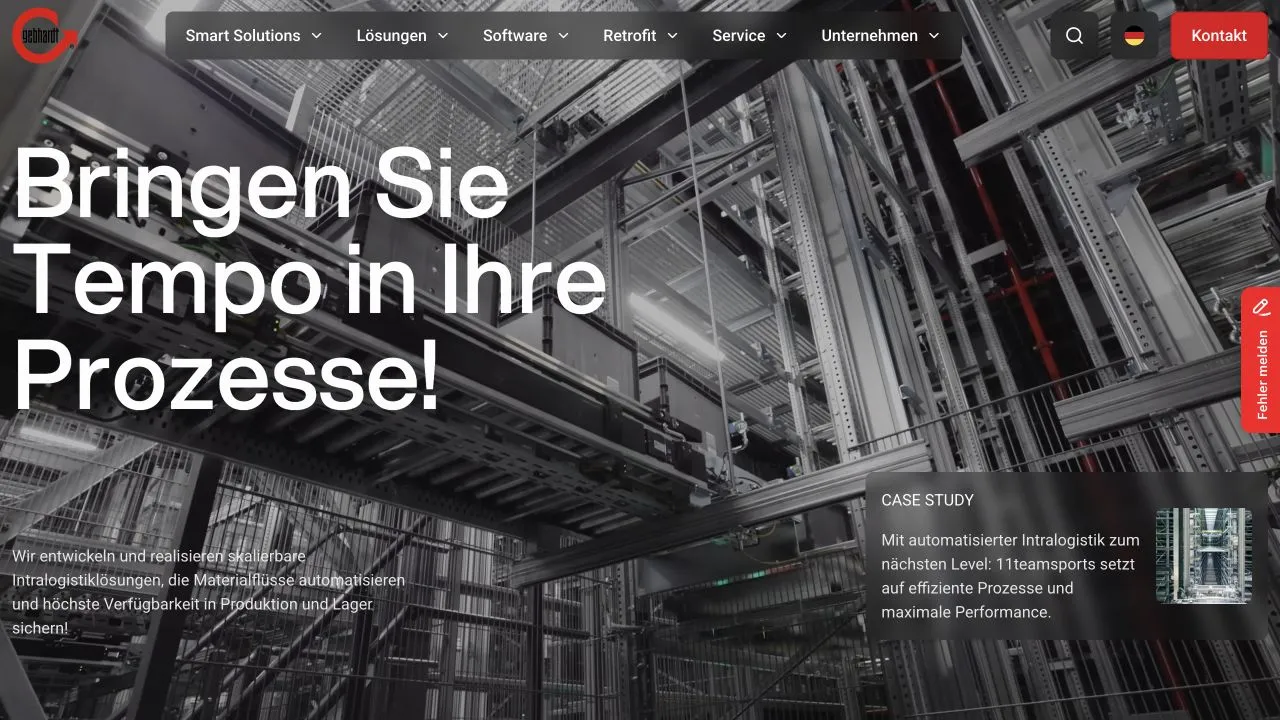
GEBHARDT
Explain intralogistics for different markets and industries. Products, solutions and references form interconnected entry points into complex topics.

Hotel Erasmus
Three properties, wellness and culinary delights in a shared experience world. Offers and inspiration guide guests from the first impression to the right stay.
More from our web design practice
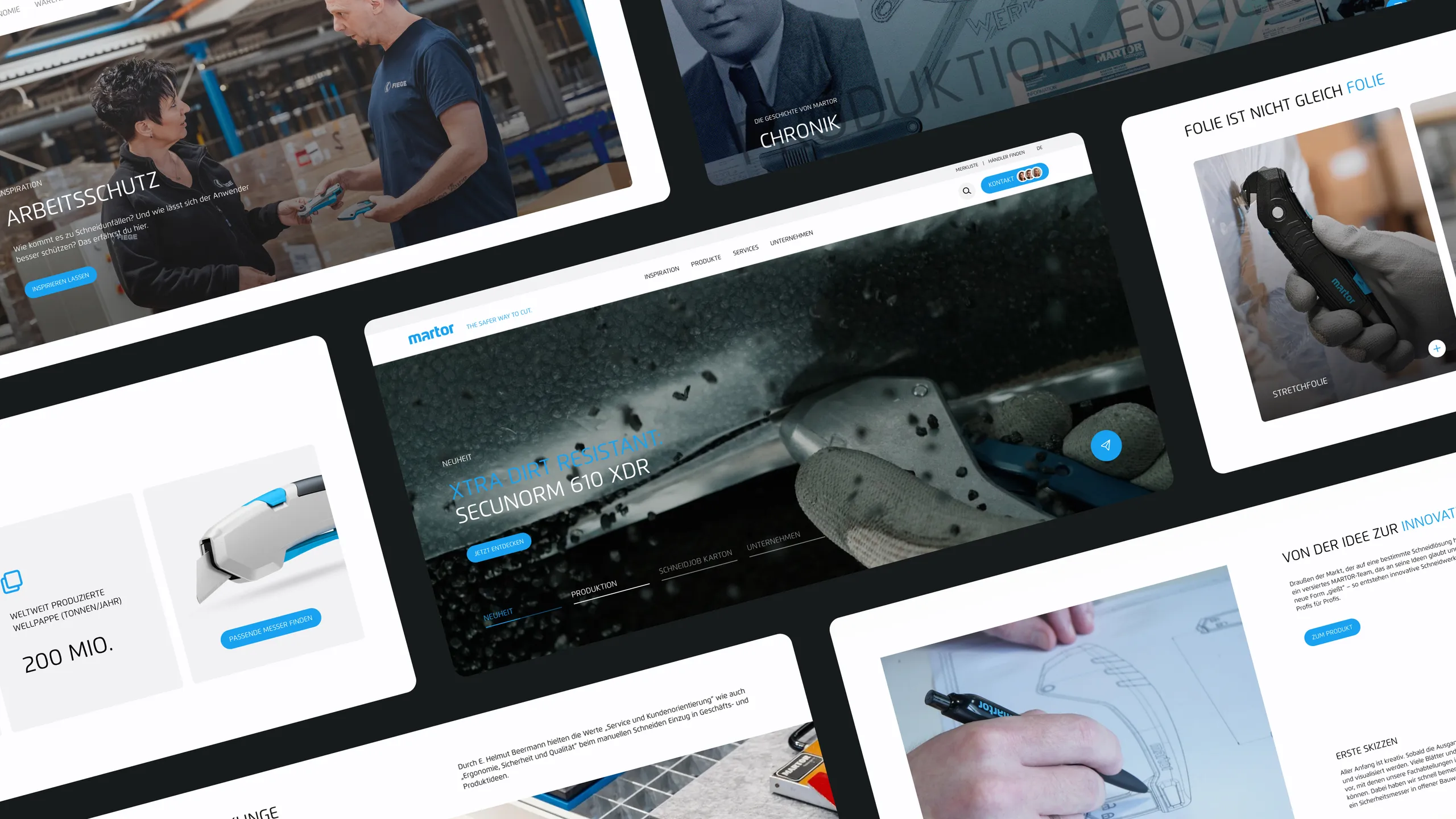
Shopware consulting
What should your platform with Shopware do better?
Shopware is suitable for shops with differentiated product ranges, their own business rules and demanding integrations. Package, operating model and extensions are compared based on your actual requirements. We review real maintenance tasks, existing data and the most important user paths. A prototype makes the decision tangible.

Your team for Shopware
We connect Shopware, brand and user guidance into a presence that supports your editorial team and advances your goals.
Team
Strategy, design, development, and marketing under one roof in Wuppertal.
Experience
Over ten years of brands and websites for medium-sized businesses and corporations.
Awards
In seven independent award programs.
The Shopware storefront connects product catalogue, content and checkout. We develop a theme that makes your brand visible and clearly structures complex information. Categories, search, variants and consulting are tested with real products. Experience worlds give the editorial team reusable layouts and clear room to manoeuvre.
The Shopware storefront connects product catalogue, content and checkout. We develop a theme that makes your brand visible and clearly structures complex information. Categories, search, variants and consulting are tested with real products. Experience worlds give the editorial team reusable layouts and clear room to manoeuvre.

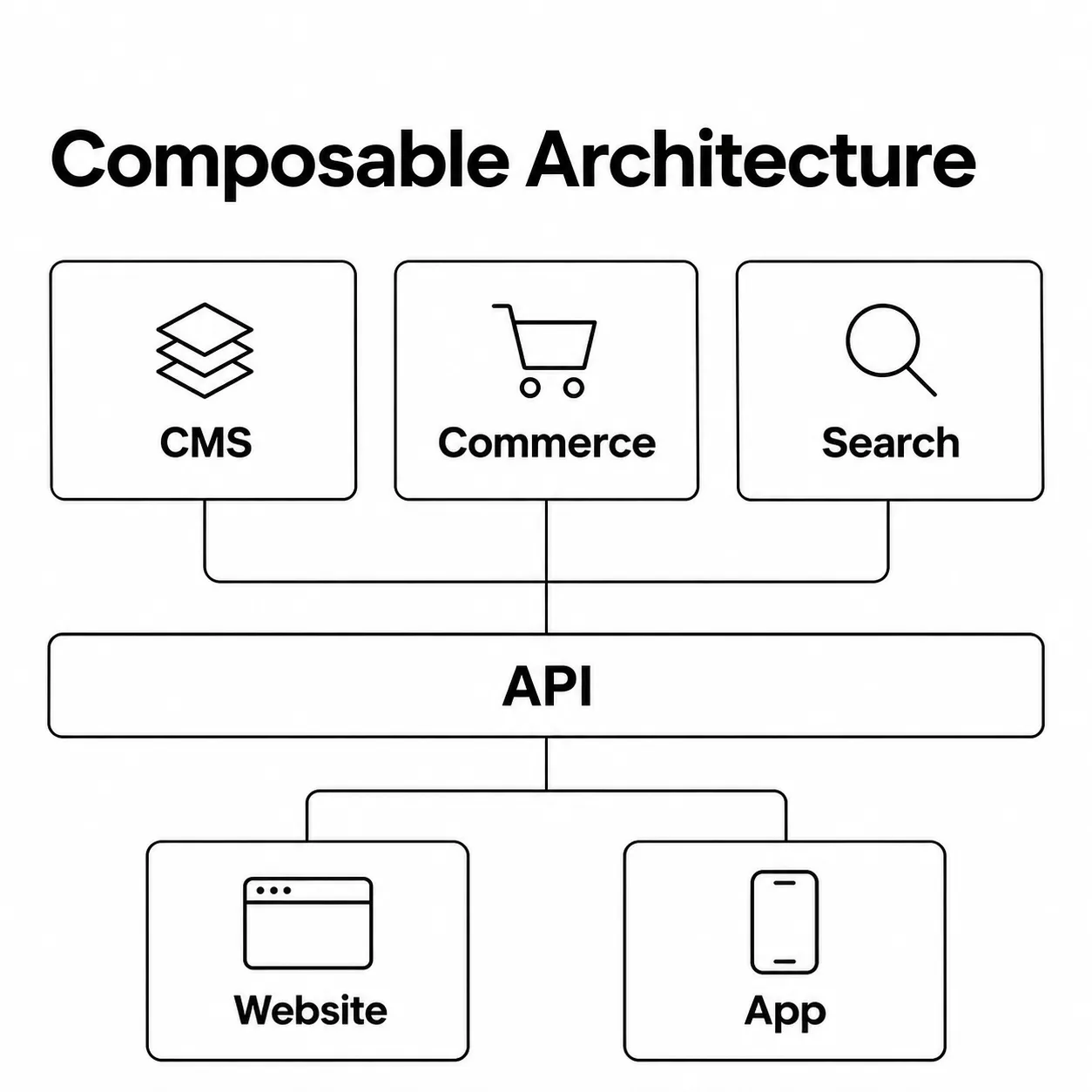
Store API and Admin API enable a separated presentation and connected applications. An additional CMS, a custom frontend or further channels can make sense. For this we deliberately plan preview, cache, search and data responsibilities. The additional flexibility must have a verifiable benefit compared to the storefront.
Store API and Admin API enable a separated presentation and connected applications. An additional CMS, a custom frontend or further channels can make sense. For this we deliberately plan preview, cache, search and data responsibilities. The additional flexibility must have a verifiable benefit compared to the storefront.
Shopware can be used with different operating models. Managed offerings and in-house operation differ in responsibility, extensibility and effort. We review required integrations, customizations and operating expertise before recommending a variant. License and package scope are evaluated together with hosting and support.
Shopware can be used with different operating models. Managed offerings and in-house operation differ in responsibility, extensibility and effort. We review required integrations, customizations and operating expertise before recommending a variant. License and package scope are evaluated together with hosting and support.

From maintenance to operations
Shopware features that matter in everyday use
Experience worlds
Combine content and products in reusable layouts. Your editorial team can consistently develop campaigns and consulting further.
Rule Builder
Define business rules for specific conditions. Prices, shipping, and further processes are checked against real order cases.
Flow Builder
Connect events with conditions and actions. Order communication and internal processes receive transparent rules.
Sales channels
Consciously structure B2C, B2B, and different markets. Catalogs, languages, and responsibilities are planned together.
Store API & Admin API
Integrate the shopping experience and data management appropriately. ERP, PIM, and additional applications receive clear interfaces.
B2B & AI extensions
Check additional features against the specific Shopware package. Automation is linked to approvals and data quality.
Rule Builder & Flow Builder
Your business rules. Understandable in the system.
A shipping offer, an order notification or an internal processing step follows specific conditions. Rule Builder and Flow Builder help to represent such rules in a comprehensible way. We document exceptions, priorities and responsibilities and test typical combinations. This way, a complex shop remains controllable in day-to-day business.
Shopware offers AI features across certain product and extension scopes. We check which assistant tasks are available in the specific setup. Drafts for content or classifications are linked to product data, brand rules and professional approvals.
Corporate customers expect suitable products, transparent terms and easy repeat ordering. We capture roles, approvals and handover to sales. Shopware B2B Components and further extensions are checked against the required package and feature scope. A B2B label does not replace an accurate mapping of your purchasing processes.
Corporate customers expect suitable products, transparent terms and easy repeat ordering. We capture roles, approvals and handover to sales. Shopware B2B Components and further extensions are checked against the required package and feature scope. A B2B label does not replace an accurate mapping of your purchasing processes.

Product descriptions, prices, stock levels and delivery times often have different sources. We define which system manages which information and how changes arrive. Import, update and deletion are tested. The shop must also respond in an understandable way when data is missing or a connected service is temporarily unavailable.
Product descriptions, prices, stock levels and delivery times often have different sources. We define which system manages which information and how changes arrive. Import, update and deletion are tested. The shop must also respond in an understandable way when data is missing or a connected service is temporarily unavailable.
Campaigns and category pages should be changeable without losing their line with every update. We create suitable elements, layouts and design rules. Product advice, mobile order and CTAs are reviewed with real content. Training and documentation help the team to use the capabilities confidently.
Campaigns and category pages should be changeable without losing their line with every update. We create suitable elements, layouts and design rules. Product advice, mobile order and CTAs are reviewed with real content. Training and documentation help the team to use the capabilities confidently.

Our services for Shopware
From platform to outcome
A robust plan starts with your processes.
We record key pages, target groups and tasks in the team. Inquiries, completions and maintenance effort are considered separately. From this, priorities emerge that you can use to evaluate the success of the project.
Shopware is suitable for shops with differentiated assortments, their own business rules and demanding integrations. Package, operating model and extensions are compared based on your actual requirements.
Products, properties and variants are aligned with categories and dynamic product groups. PIM and ERP retain clearly defined responsibilities. Custom fields and content are planned so that search, filters and editorial work use the same structure.
The Shopware storefront connects product catalog, content and checkout. We develop a theme that makes your brand visible and structures complex information in an understandable way. Categories, search, variants and consultancy are tested with real products. Experience worlds give editorial teams reusable layouts and clear room to manoeuvre.
Scope is determined by assortment complexity, individual rules, experience worlds, operating model, license scope and integrations. On top come the required licenses, hosting and support. We separate one-off implementation and ongoing effort and compare the planned expansion over several years.
We define who prepares content, reviews it professionally and publishes it. A test with a real page shows which permissions and guidance are needed. New processes are tried out with your editorial team.
Your brand becomes an operable system.
We guide from the concrete question to the right offering. Navigation, search, and contact paths are aligned with your target groups. Prototypes make these paths testable before development.
Colors, typography, components, and states are designed together. Your editorial team receives reusable elements with clear degrees of freedom. This way new pages remain part of the same brand.
Store API and Admin API enable a separate presentation layer and connected applications. An additional CMS, a custom frontend, or further channels can be useful. For this, we consciously plan preview, cache, search, and data responsibilities. The added flexibility must have a verifiable benefit compared to the storefront.
We review menus, forms, content order, and media on small screens. Touch targets, legible type, and short paths are part of the concept. The mobile version is approved with real content.
Keyboard operation, focus, contrasts, labels, and understandable error messages are checked on the components. The editorial team also receives rules for headings, links, and alternative texts.
Experience worlds give recurring content pages a designed foundation. We assess which layouts and elements the editorial team should assemble themselves. Maintenance and mobile display are approved using real examples.
Structuring content so that people find answers.
We assign search queries to your services and products. Every important page gets its own task, suitable evidence, and a next step. Similar terms do not automatically lead to several almost identical pages.
Categories, products, and consulting are given clear search intents. We review SEO URLs, metadata, canonicals, sitemap, and structured data. Filters and variants require rules so that valuable entry points remain visible and unnecessary duplicates are avoided.
Sales channels, languages, currencies, and local content are planned together. Assortments, shipping, and payment methods can have different requirements per market. Professional and legal approvals remain clearly assigned.
Texts, images, and videos are created from your actual offering. We clarify statements, responsibilities, and approvals early. Content is prepared based on real page formats and checked in the CMS.
Services, technical terms, use cases, and sources are explained in a traceable way. For AI search, the same statements need accessible pages and reliable evidence. Mentions and cited sources can be monitored; a recommendation by an AI system is not guaranteed.
We define events along the inquiry or purchase. Evaluation and consents are aligned with your setup. Decisive are actionable contacts and conversions, supplemented by usage and editorial effort.
Data should be maintained in the right place.
Admin API and suitable integrations connect Shopware with ERP, PIM, CRM, and logistics. Transfers receive unique identifiers, defined retries, and verifiable error paths. Orders are tested through to the downstream system.
We plan required fields, validation, responsibilities, and the handover into the CRM. A successful submission must arrive in the target system. Error cases and feedback to users are co-tested.
Rule Builder, Flow Builder, and available B2B extensions help to map concrete business processes. Terms, availability, and checkout are tested with real order scenarios. Required commercial functions are reconciled in the package beforehand.
Search, filters, and sorting start from users’ tasks. We test typical terms, synonyms, and empty result lists. Updating and access rights are part of the concept for a connected search solution.
Shopware offers AI features depending on certain product and extension scopes. We review which assistant tasks are available in the specific setup. Drafts for content or classifications are linked with product data, brand rules, and professional approvals.
For each connection, responsibilities, updating, and error handling are defined. Logs and notifications help to detect interrupted transfers. Retries must not create duplicate records or orders.
The transition is part of the project.
We check products, customers, orders, and media with a test import. Variants and rules are reconciled on a professional level. Old URLs receive appropriate targets; price calculation, shipping, payment, and handovers are tested before the switch.
We assign existing URLs to specific new targets. Important content remains accessible; unnecessary redirect chains are avoided. After the changeover we check status codes, canonicals, internal links, and sitemap.
We test editorial tasks, responsive display, search, and forms with real content. Central integrations are tested including error cases. Before go-live, responsibilities, acceptance criteria, and a rollback plan are defined.
Your team works on its own content during training. Field help, short guides, and responsibilities remain available after launch. New components are planned as further development.
Updates, extensions, and customizations are tested in a staging environment. Backups and restoration are part of the operating concept. Responsibilities differ by hosting model and are defined before launch.
After launch, we prioritize based on agreed metrics and your feedback. New features receive a clear goal and verifiable acceptance. This keeps the platform connected to your business.
Additional services
More impact for your digital presence







Brand strategy

Brand identity

Brand rollout

Brand growth

Employer Branding

UX, UI & Design

E-Commerce
Platforms
APIs & Automation
Content Creation

Motion Design

3D & CGI

Photography

Digital Marketing

Ad Creatives

GEO

Social Ads

Copywriting
Architecture & data
Shopware interacting with your systems
A Digital Experience Platform is created through suitable building blocks and clear data responsibility. We only add what supports your user journeys and processes.
Shopware
Products, properties and variants are aligned with categories and dynamic product groups. PIM and ERP keep clearly defined responsibilities. Additional fields and content are planned so that search, filters and editorial work use the same structure.
Presentation & editorial
Shopping Experiences provide a designed foundation for recurring content pages. We check which layouts and elements the editorial team should assemble themselves. Maintenance and mobile display are approved using real examples.
Data & interfaces
Admin API and suitable integrations connect Shopware with ERP, PIM, CRM and logistics. Transfers receive unique identifiers, defined retries and verifiable error paths. Orders are tested through to the downstream system.
Offers & transactions
Rule Builder, Flow Builder and available B2B extensions help to map concrete business processes. Conditions, availability and checkout are tested with real order scenarios. Required commercial functions are compared in the package in advance.
Languages & markets
Sales channels, languages, currencies and local content are planned together. Assortments, shipping and payment methods can have different requirements per market. Professional and legal approvals remain clearly assigned.
Operations & further development
Updates, extensions and individual customizations are tested in a staging environment. Backups and recovery are part of the operations concept. Responsibilities differ depending on the hosting model and are defined before launch.
»Wir waren mit der Agentur Pechschwarz sehr zufrieden. Wir sind sicher, mit dieser langfristig einen guten E-Commerce- & Shop-Berater an unserer Seite zu haben. Eine starke Full-Service Agentur die tatsächlich alle Bereiche gut abdeckt, sowie durch Kreativität, persönliche Erreichbarkeit und ein gutes Preis-Leistungs-Verhältnis überzeugt.«





Ready for more?




Ready for more?
pechschwarz®
Brand, design and technology. One shared team.
A platform alone does not yet solve any task. We connect brand strategy, user guidance, content and development – with dedicated contacts and clear decisions in every phase.
For your Shopware project we combine strategy and design with a comprehensible implementation. You evaluate real content models, prototypes and user journeys. Editorial handover, interfaces and ongoing support are planned together.
Typical applications
Shopware for your requirements
Shopware connects different sales models with structured product and content data.



Which solution fits?
Complexity needs clear rules.
Which solution fits?
Complexity needs clear rules.
Shopware with pechschwarz®
Data, purchase paths and operations are planned together.
Grown standalone solutions
Unclear dependencies increase the effort required for changes.
Our process
How your Shopware project takes shape
From the first workshop to launch: a dedicated team, clear decisions, and shared goals. You know what will be created next.
Goals & current setup
We review target groups, existing content and your day-to-day maintenance. Shopware is suitable for shops with differentiated assortments, their own business rules and demanding integrations. Package, operating model and extensions are compared based on your actual requirements.
Concept & architecture
The Shopware Storefront connects product catalog, content and checkout. We develop a theme that makes your brand visible and clearly structures complex information. Categories, search, variants and consultation are tested with real products. Shopping Experiences give the editorial team reusable layouts and clear room to maneuver.
Design & editorial
We design real pages, content and interactions. Your team tests maintenance before the system is expanded to additional page types.
Implementation & transition
We check products, customers, orders and media with a test import. Variants and rules are aligned professionally. Old URLs receive suitable targets; price calculation, shipping, payment and handovers are tested before the switch.
Launch & further development
Acceptance, training and switchover interlock. After launch we prioritize improvements based on your goals and feedback.
Plan Shopware based on assortment and processes
Shopware is suitable for shops with differentiated assortments, their own business rules, and demanding integrations. Package, operating model, and extensions are compared based on your actual requirements.
The right architecture results from product data, buying paths, and operational responsibility. We consider B2B and B2C, international markets, and the effort for later changes together. An individual solution needs clear boundaries and transparent responsibilities.
Plan content, data, and approvals together
Products, properties, and variants are aligned with categories and dynamic product groups. PIM and ERP keep clearly defined responsibilities. Custom fields and content are planned so that search, filters, and editorial work use the same structure.
Admin API and suitable integrations connect Shopware with ERP, PIM, CRM, and logistics. Transfers receive unique identifiers, defined retries, and verifiable error paths. Orders are tested all the way through to the downstream system.
Ongoing operations are part of the decision
Updates, extensions, and individual customizations are tested in a staging environment. Backups and restoration are part of the operations concept. Responsibilities differ depending on the hosting model and are defined before launch.
Scope is determined by assortment complexity, individual rules, experience worlds, operating model, license scope, and integrations. In addition, required licenses, hosting, and support are added. We separate one-time implementation from ongoing effort and compare the planned expansion over several years.
Knowledge for your digital platform
Use the arrow keys to browse. Home shows the beginning, End the last posts. Use Tab to select post links.

FAQ
Questions about your Shopware project
No. What matters are assortment, business rules, and integrations. We compare the required scope and ongoing costs with suitable alternatives.
Rule Builder describes conditions. Flow Builder connects events, conditions, and actions into processes. Both are aligned with your specific order processes.
The range of functions depends on the package and extensions. Roles, conditions, and approval processes are therefore checked individually.
Yes, APIs enable separate frontends and additional channels. Preview, search, and operations must be integrated separately for this.
We review version, extensions, customizations, and data flows. From this we create a prioritized plan for stabilization, updates, and further development.
Scope is determined by assortment complexity, individual rules, experience worlds, operating model, license scope, and integrations. In addition, required licenses, hosting, and support are added. We separate one-time implementation from ongoing effort and compare the planned expansion over several years.
We check products, customers, orders, and media with a trial import. Variants and rules are reconciled from a business perspective. Old URLs receive suitable targets; price calculation, shipping, payment, and handovers are tested before the switch.
Updates, extensions, and individual customizations are tested in a staging environment. Backups and restoration are part of the operations concept. Responsibilities differ depending on the hosting model and are defined before launch.
Let’s achieve more with Shopware.