
TYPO3 agency for stronger platforms











Our awards




Results that count
Outstanding work for brands
Brands
From hidden champion to global player.
Ranking
1st place at the German Web Awards 2026.
Rating
Average rating from our clients.
Reviews
Customer reviews on ProvenExpert.
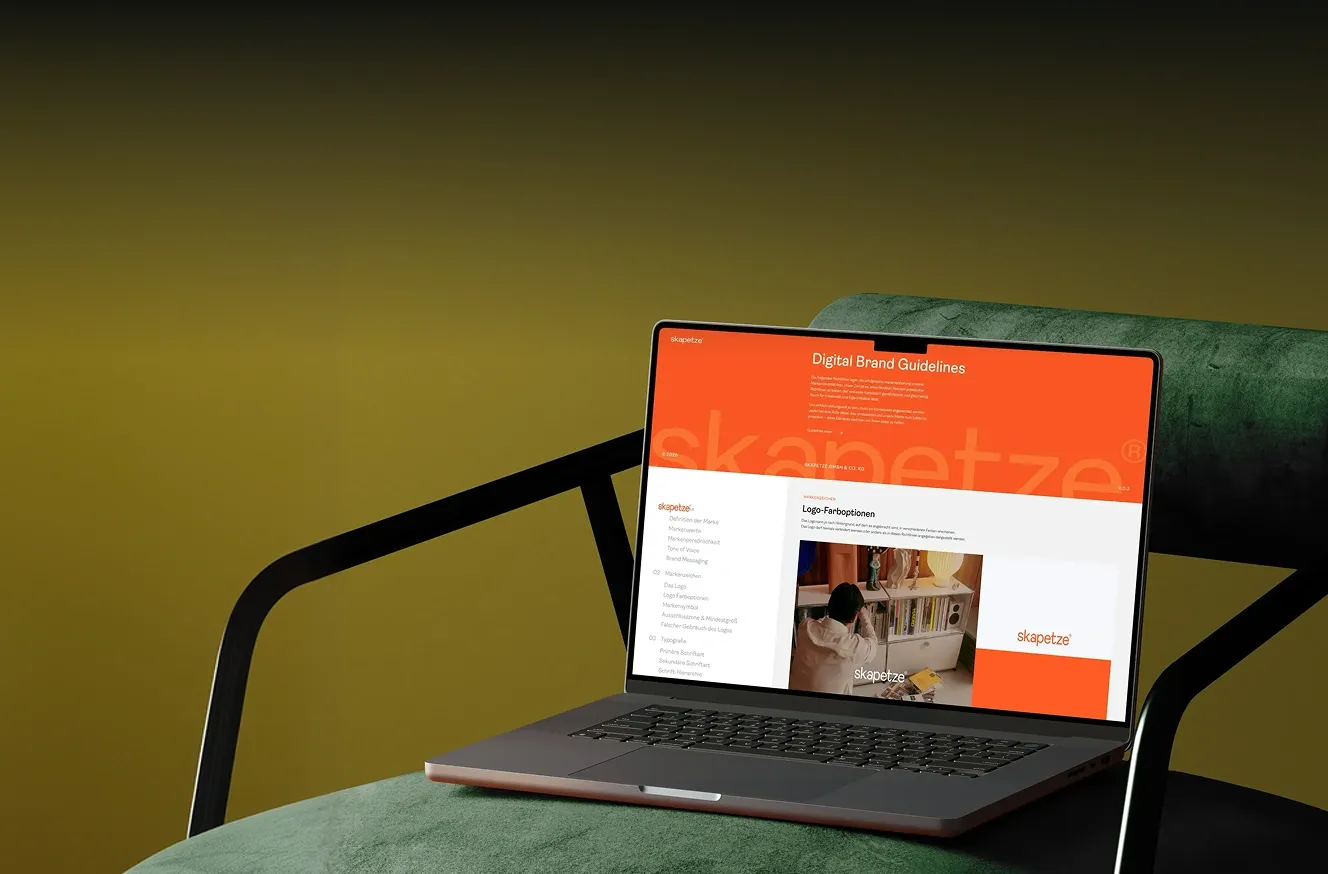
Multisite & site configuration
Manage multiple websites with shared foundations. Domains, languages and configuration are defined specifically for each site.

Multilingual editorial
Plan linked translations or independent local content. The structure is aligned with the responsibilities of your markets.

Workspaces & approvals
Prepare changes together before publishing. Workspaces and approval levels reflect your areas of responsibility.

Roles & permissions
Give access to page trees, files and functions as appropriate. Editors see and edit only the areas they are responsible for.
Content blocks & Fluid
Develop your own content elements with suitable fields and templates. Your design system becomes an intuitive editorial tool.
Extensions & interfaces
Extend functionality in a targeted way and connect existing systems. Compatibility, updates and data responsibility are clarified in advance.
Brand, design & development
Digital projects from our practice
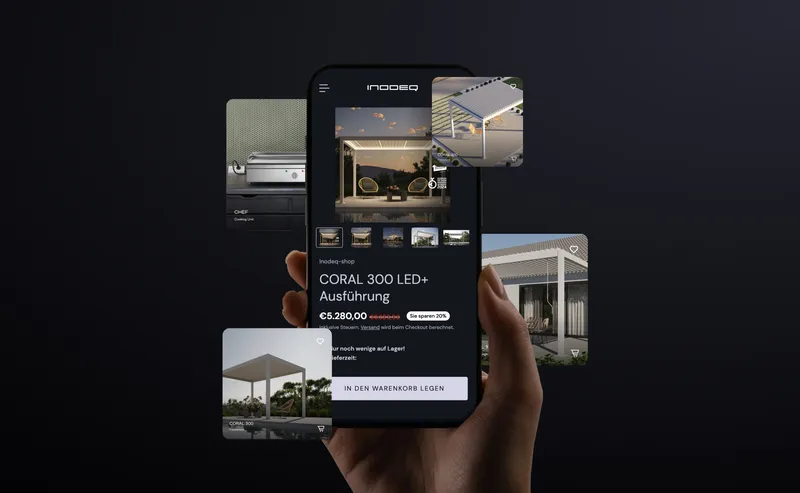
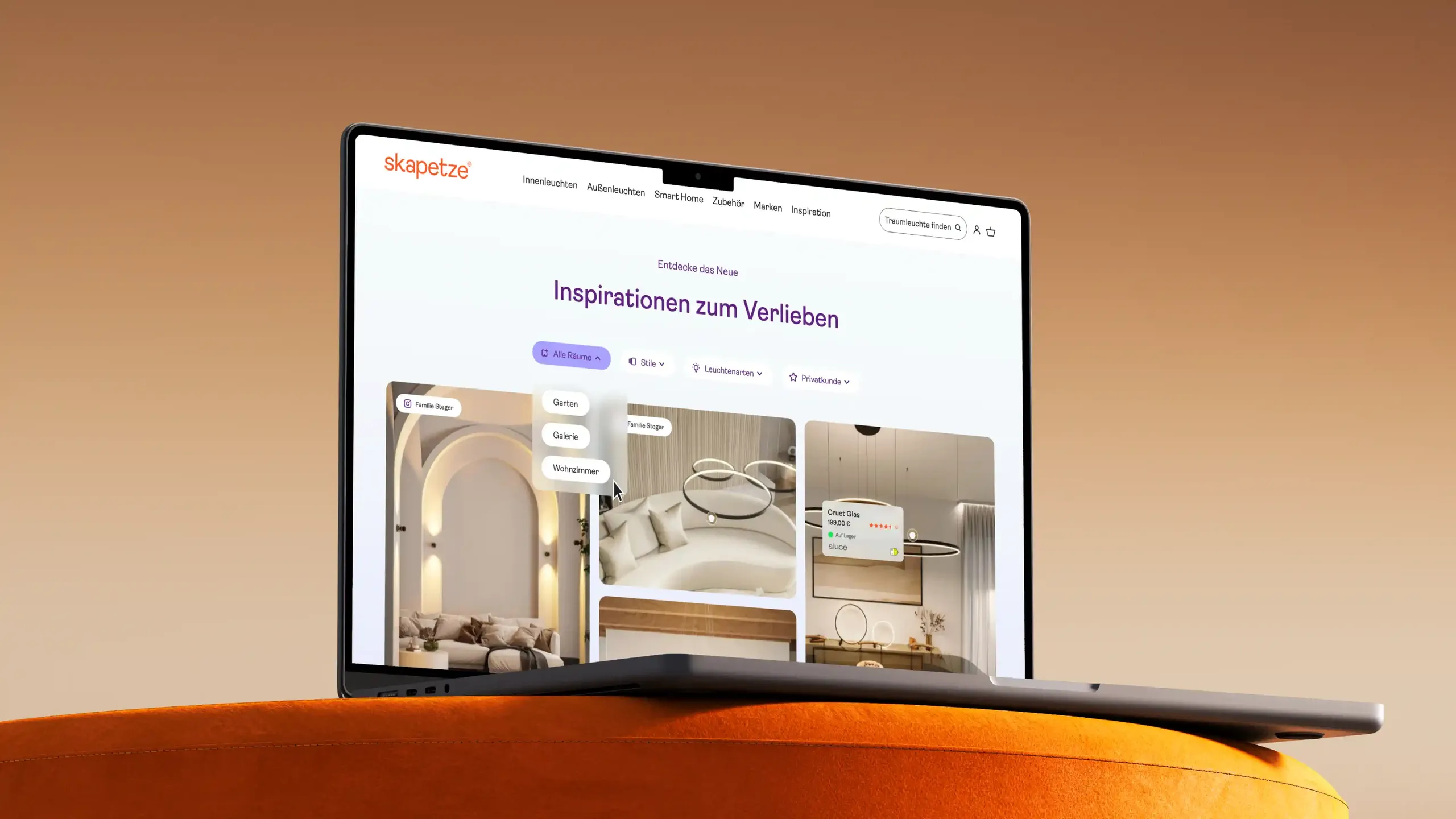
Insights into our work for finance, healthcare, industry and hospitality. The projects show our design and user guidance across different technologies.
Radiology Advanced
Explain teleradiology in an understandable way and clearly structure offerings. Corporate presence, journal and academy create orientation for different target groups.
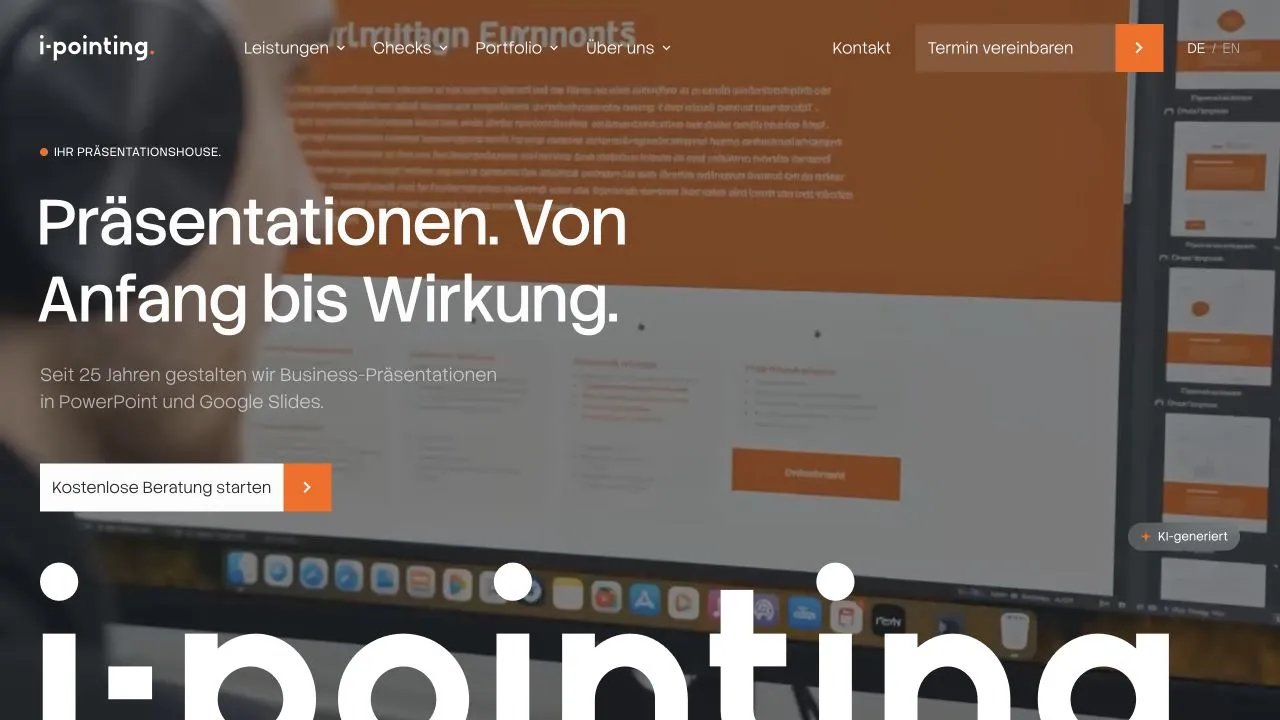
i-pointing
A presence for the presentation house from Munich. Services, portfolio and consulting topics come together as clear paths through the offering.
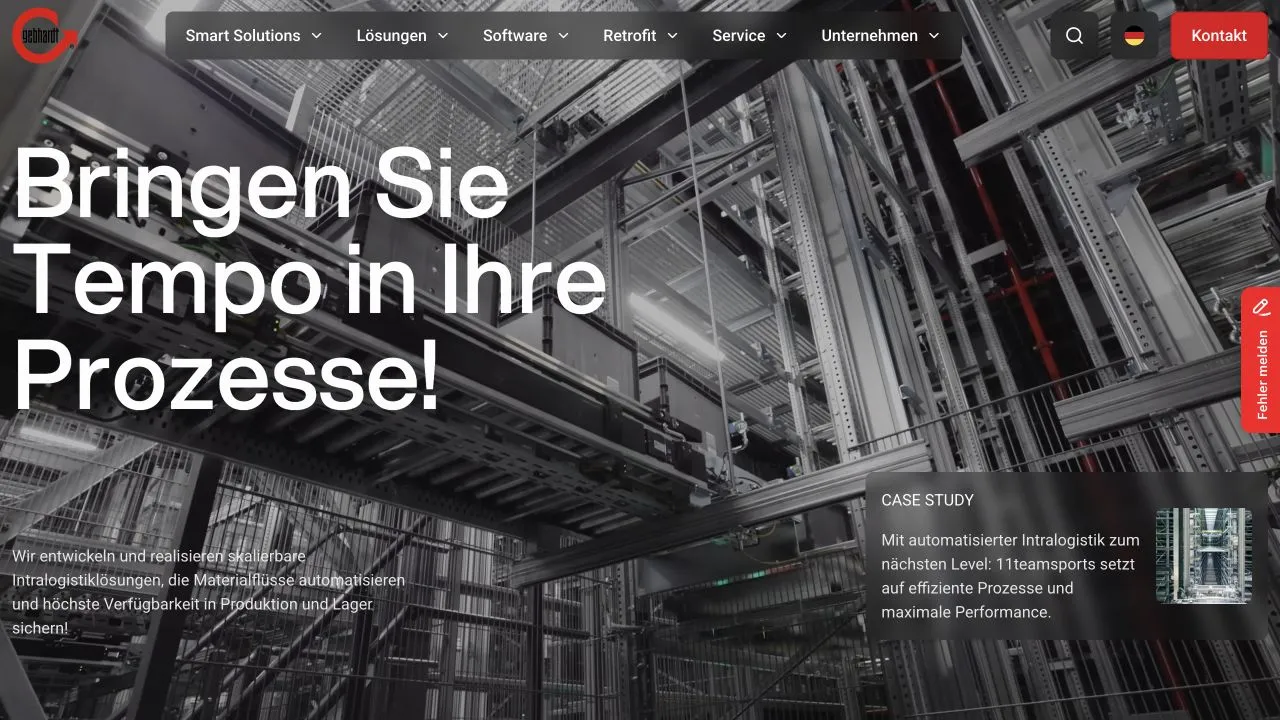
GEBHARDT
Explain intralogistics for different markets and sectors. Products, solutions and references form coherent entry points into complex topics.
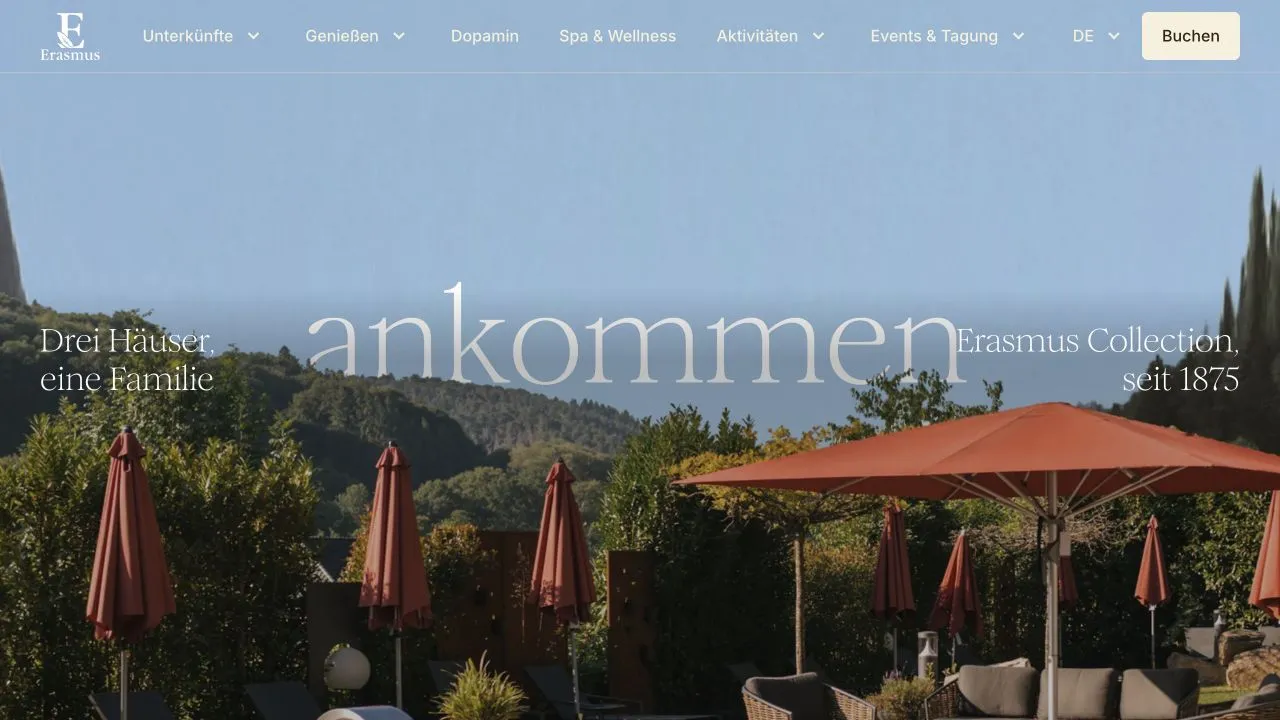
Hotel Erasmus
Three houses, wellness and culinary delights in a shared world of experiences. Offers and inspiration guide guests from first impression to the right stay.
More from our web design practice
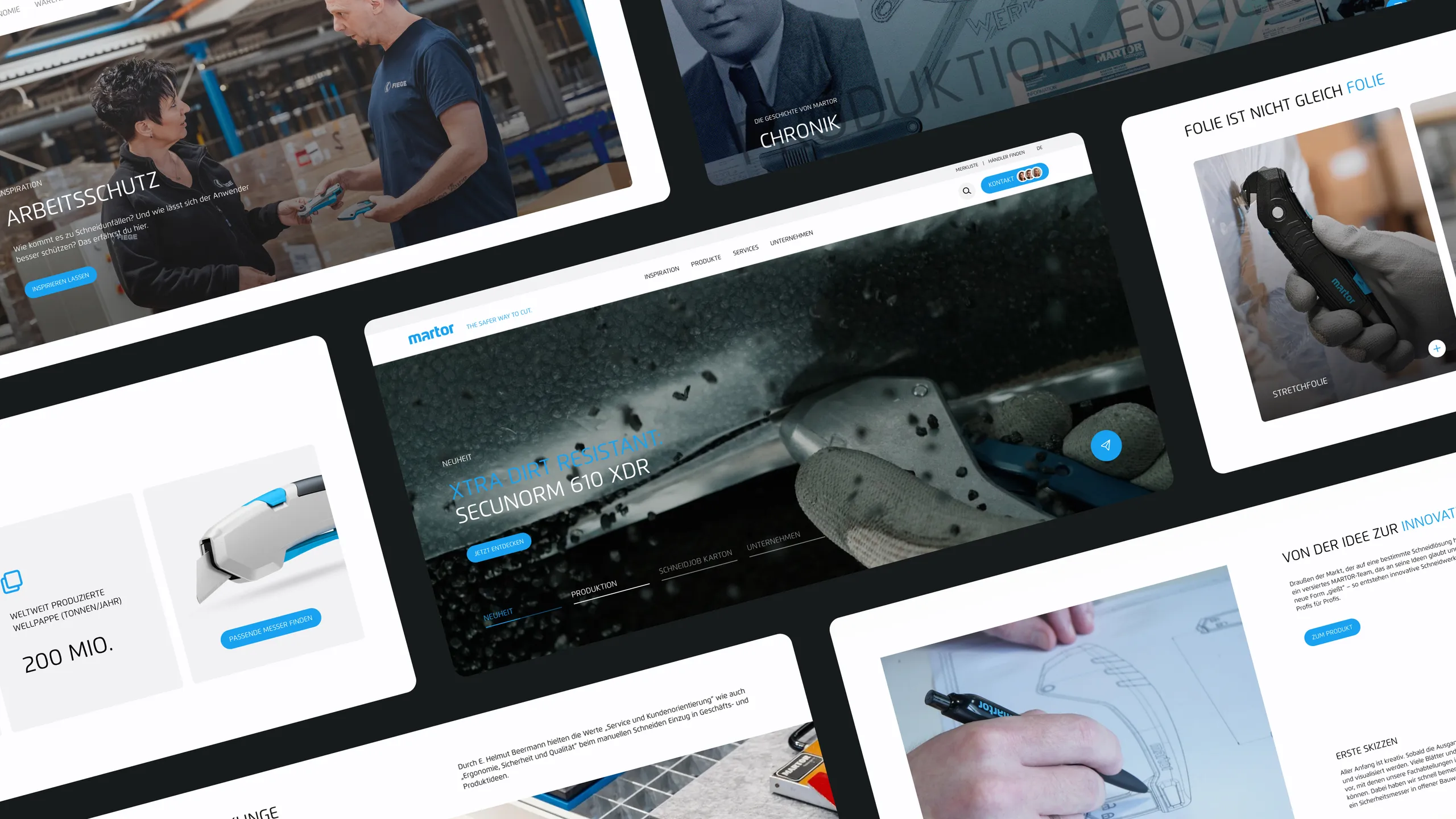
TYPO3 consulting
What should your platform be able to do better with TYPO3?
TYPO3 is particularly interesting for larger site inventories, multiple sites and differentiated editorial permissions. Whether it suits you depends on approvals, integrations and available resources. For a small campaign site, a leaner system may be sufficient. We review real maintenance tasks, existing data and the most important user paths. A prototype makes the decision tangible.

Your team for TYPO3
We combine TYPO3, brand and user guidance into a presence that supports your editorial team and advances your goals.
Team
Strategy, design, development, and marketing under one roof in Wuppertal.
Experience
Over ten years of brands and websites for medium-sized businesses and corporations.
Awards
In seven independent award programs.
TYPO3 can manage multiple sites in one installation. Together we plan page trees, shared components and separate areas of responsibility. Site configuration and site sets help organize suitable settings and dependencies. The central foundation is meant to support local teams: offerings, contacts and editorial responsibilities remain independent where your company needs them to.
TYPO3 can manage multiple sites in one installation. Together we plan page trees, shared components and separate areas of responsibility. Site configuration and site sets help organize suitable settings and dependencies. The central foundation is meant to support local teams: offerings, contacts and editorial responsibilities remain independent where your company needs them to.
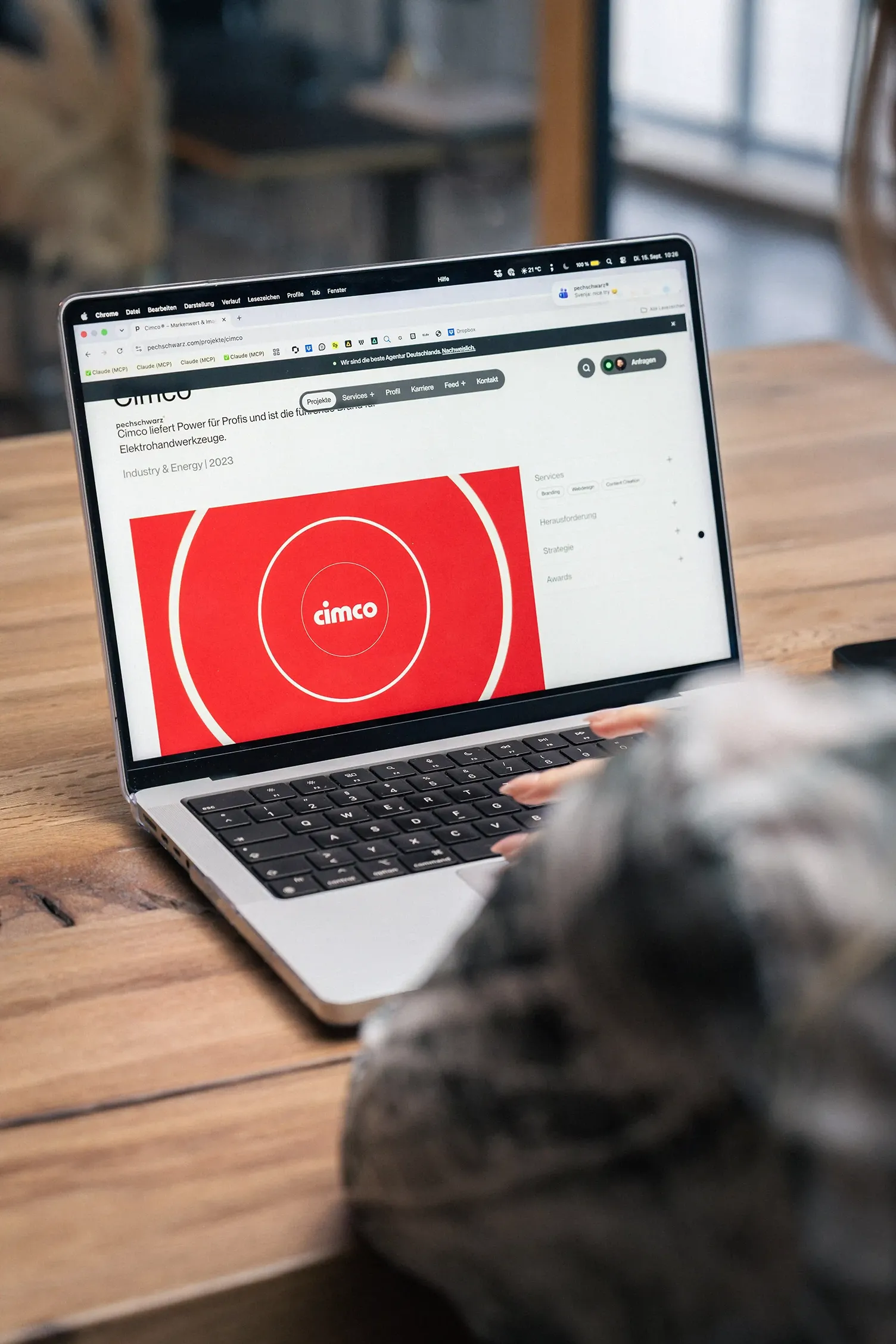
Fluid templates and individually defined content elements translate your brand into a usable website. Content blocks are one way to structure these elements. We evaluate the implementation that fits the TYPO3 version in use. Editors get clear fields, previews and permitted combinations. A real product, a service and a campaign serve as a test before the entire system is expanded.
Fluid templates and individually defined content elements translate your brand into a usable website. Content blocks are one way to structure these elements. We evaluate the implementation that fits the TYPO3 version in use. Editors get clear fields, previews and permitted combinations. A real product, a service and a campaign serve as a test before the entire system is expanded.

PIM, CRM, search or protected offerings can complement TYPO3. For each type of data we define where it is maintained and how it is updated. A separate frontend output is also possible, but requires a suitable API and preview solution. For many corporate websites, integrated output is a sensible choice. We assess the additional effort of a headless architecture based on your channels and functions.
PIM, CRM, search or protected offerings can complement TYPO3. For each type of data we define where it is maintained and how it is updated. A separate frontend output is also possible, but requires a suitable API and preview solution. For many corporate websites, integrated output is a sensible choice. We assess the additional effort of a headless architecture based on your channels and functions.

From maintenance to operation
TYPO3 functions that matter in everyday work
Multisite & site configuration
Manage multiple websites with shared foundations. Domains, languages, and configuration are specifically defined per site.
Multilingual editing
Plan linked translations or independent local content. The structure is based on the tasks of your markets.
Workspaces & approvals
Prepare changes together before publication. Workspaces and approval levels reflect your areas of responsibility.
Roles & permissions
Grant access to page trees, files, and functions as needed. Editors see and edit the areas they are responsible for.
Content blocks & Fluid
Develop your own content elements with appropriate fields and templates. Your design system becomes an intuitive editorial tool.
Extensions & interfaces
Specifically extend functions and connect existing systems. Compatibility, updates and data responsibility are clarified in advance.
TYPO3 in practice
Many editorial teams. One common direction.
A corporate presence needs shared rules and local room for action. With TYPO3, we plan permissions, languages and workspaces so that the team can prepare, review and approve a change. Different markets get appropriate leeway, while design and central information remain consistent.
AI support can be added via suitable extensions or connected services. We review translation drafts, summaries and search tasks using your content. Providers, access, costs and editorial control explicitly remain part of the selection criteria.
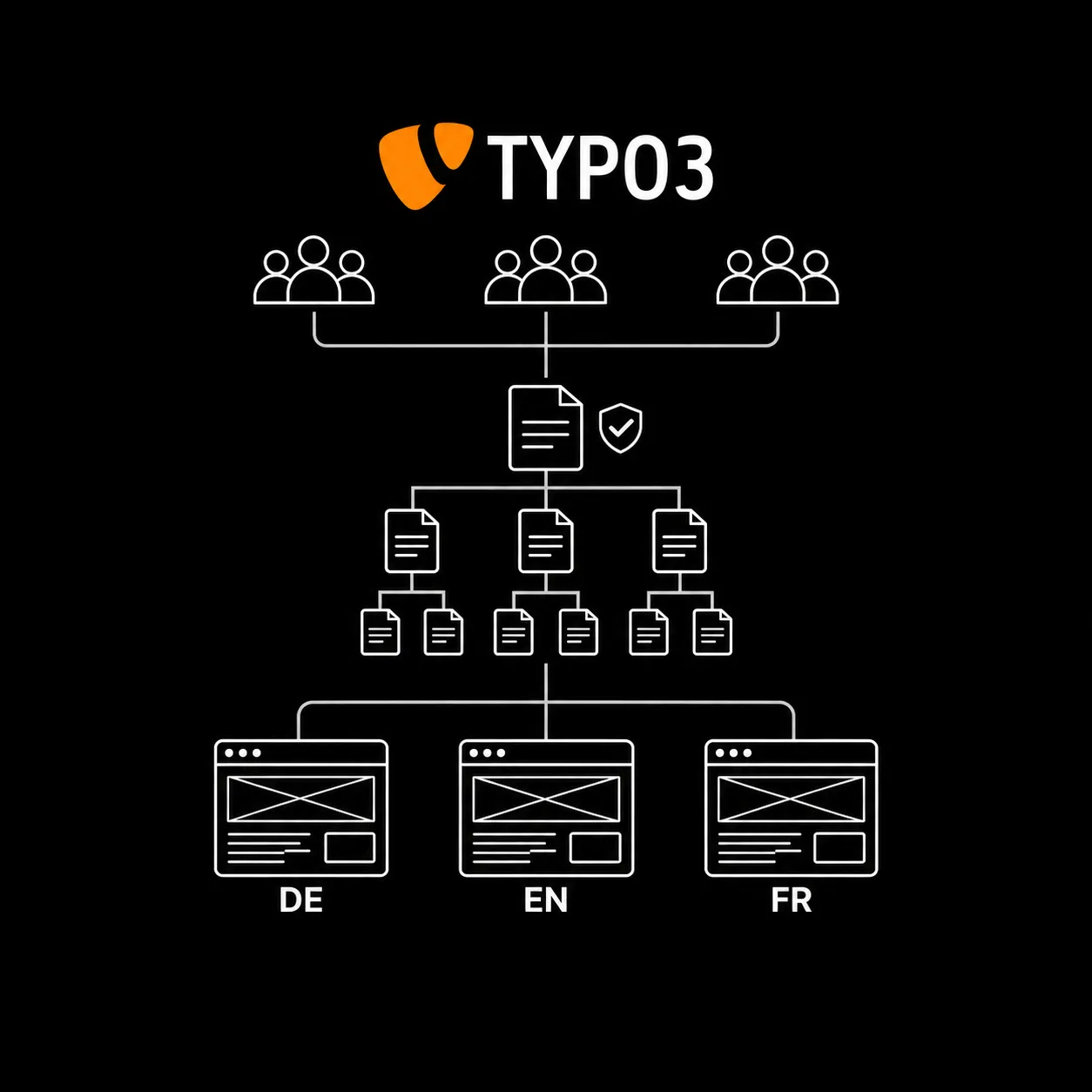
TYPO3 supports linked translations and independent content. In a linked version, source text and translation remain connected; independent content allows different structures. We choose a comprehensible approach for each page type. A local offering sometimes needs its own page, while technical product information should be maintained jointly.
TYPO3 supports linked translations and independent content. In a linked version, source text and translation remain connected; independent content allows different structures. We choose a comprehensible approach for each page type. A local offering sometimes needs its own page, while technical product information should be maintained jointly.

A workspace only helps if it is clear who prepares and publishes changes. We test the process from draft through expert review to approval. Roles are set up so that external support and internal editorial staff can work together. Handling short-term corrections and already prepared campaigns is also clarified.
A workspace only helps if it is clear who prepares and publishes changes. We test the process from draft through expert review to approval. Roles are set up so that external support and internal editorial staff can work together. Handling short-term corrections and already prepared campaigns is also clarified.

TYPO3 version, extensions, PHP and infrastructure have their own life cycles. We record dependencies, plan test environments and review key page types and forms before an upgrade. Custom extensions are documented and checked for compatibility. This turns a postponed major project into a comprehensible ongoing development process.
TYPO3 version, extensions, PHP and infrastructure have their own life cycles. We record dependencies, plan test environments and review key page types and forms before an upgrade. Custom extensions are documented and checked for compatibility. This turns a postponed major project into a comprehensible ongoing development process.

Our services for TYPO3
From platform to result
A reliable plan begins with your workflows.
We record important pages, target groups and tasks within the team. Inquiries, conversions and maintenance effort are considered separately. From this, priorities emerge that you can use to evaluate the success of the project.
TYPO3 is particularly interesting for larger page inventories, multiple sites and differentiated editorial permissions. Whether it suits you depends on approvals, integrations and available resources. For a small campaign site, a leaner system may be sufficient.
Page types, content elements and recurring data records are planned separately. Products, locations and contacts receive appropriate relationships. Content blocks or custom extensions extend the model where standard fields are not enough.
TYPO3 can manage multiple sites in one installation. We plan page trees, shared components and separate areas of responsibility together. Site configuration and site sets help organize suitable settings and dependencies. The central foundation is intended to support local teams: offerings, contacts and editorial responsibilities remain independent where your company needs them to be.
Scope is determined by page and permission structure, languages, individual content elements, extensions, migration and integrations. In addition, required licenses, hosting and support are added. We separate one-off implementation and ongoing effort and compare the planned expansion over several years.
We determine who prepares content, reviews it for accuracy and publishes it. A test with a real page shows which permissions and guidance are needed. New workflows are tested with your editorial team.
Your brand becomes an operable system.
We guide users from a concrete question to the right offering. Navigation, search, and contact options are aligned with your target groups. Prototypes make these paths testable before development.
Colors, typography, components, and states are designed together. Your editorial team receives reusable elements with clear degrees of freedom. This keeps new pages part of the same brand.
Fluid templates and individually defined content elements translate your brand into an operable website. Content blocks are one way to structure these elements. We review the implementation that matches the TYPO3 version in use. Editors receive unambiguous fields, previews, and allowed combinations. A real product, a service, and a campaign are used as tests before the entire system is expanded.
We review menus, forms, content order, and media on small screens. Touch targets, legible text, and short paths are part of the concept. The mobile version is approved using real content.
Keyboard operation, focus, contrasts, labels, and understandable error messages are reviewed at the component level. The editorial team also receives rules for headings, links, and alternative texts.
Editors test page maintenance, preview, and approval using their actual tasks. Workspaces and permissions are aligned with these. Field help and preconfigured content elements keep maintenance understandable.
Structure content so that people find answers.
We assign search queries to your services and products. Every important page receives its own task, suitable evidence, and a next step. Similar terms do not automatically lead to several almost identical pages.
We plan metadata, canonicals, redirects, and sitemaps together with the page tree and language variants. Technical output and structured data are reviewed in the frontend. A relaunch receives a traceable mapping of old and new URLs.
Linked translations are suitable for parallel content; independent versions for local differences. Domains, language paths, fallbacks, and hreflang must fit this. The decision is made per content type and market.
Texts, images, and videos are created from your actual offering. We clarify statements, responsibilities, and approvals early. Content is prepared based on real page formats and checked in the CMS.
Services, technical terms, use cases, and sources are explained in a comprehensible way. For AI search, the same statements need accessible pages and reliable evidence. Mentions and cited sources can be monitored; a recommendation by an AI system is not guaranteed.
We agree on events along the request or purchase. Evaluation and consents are aligned with your setup. Decisive are actionable contacts and completions, supplemented by usage and editorial effort.
Data should be maintained in the right place.
APIs and custom extensions connect, for example, PIM, CRM, and search with TYPO3. Leading systems, synchronization, and permissions are explicitly defined. Large imports require error reports and repeatable processing.
We plan required fields, validation, responsibilities, and the handover into the CRM. A successful submission must arrive in the target system. Error cases and feedback to users are tested as well.
TYPO3 can deliver product consulting, documentation, and brand content. Transactions can take place in a connected shop system. We plan transitions, identities, and product identifiers as a coherent user journey.
Search, filters, and sorting start from users’ tasks. We review typical terms, synonyms, and empty result lists. Updating and access rights are part of the concept for a connected search solution.
AI support can be added via suitable extensions or connected services. We review translation drafts, summaries, and search tasks using your content. Providers, access, costs, and editorial control remain an explicit part of the selection.
For each connection, responsibilities, updating, and error handling are defined. Logs and notifications help detect interrupted transfers. Re-runs must not create duplicate records or orders.
The transition is part of the project.
We inventory page trees, files, records, and existing extensions. A trial import checks relationships and language versions. In parallel, URL targets, editorial handover, and the update shortly before launch are prepared.
We assign existing URLs to specific new targets. Important content remains accessible; unnecessary redirect chains are avoided. After the switch, we review status codes, canonicals, internal links, and sitemap.
We test editorial tasks, responsive display, search, and forms with real content. Key integrations are tested including error cases. Before go-live, responsibilities, acceptance criteria, and a rollback plan are defined.
Your team works on its own content during training. Field help, short guides, and responsibilities remain available after launch. New components are planned as further development.
We jointly plan supported versions, extension compatibility, security updates, and the technical environment. Updates are tested in a staging environment. Monitoring, backups, and restoration receive clear responsibilities.
After launch, we prioritize based on agreed metrics and your feedback. New features receive a clear goal and verifiable acceptance. This keeps the platform connected to your business.
Additional services
More impact for your digital presence





Brand strategy

Brand identity

Brand rollout

Brand Growth
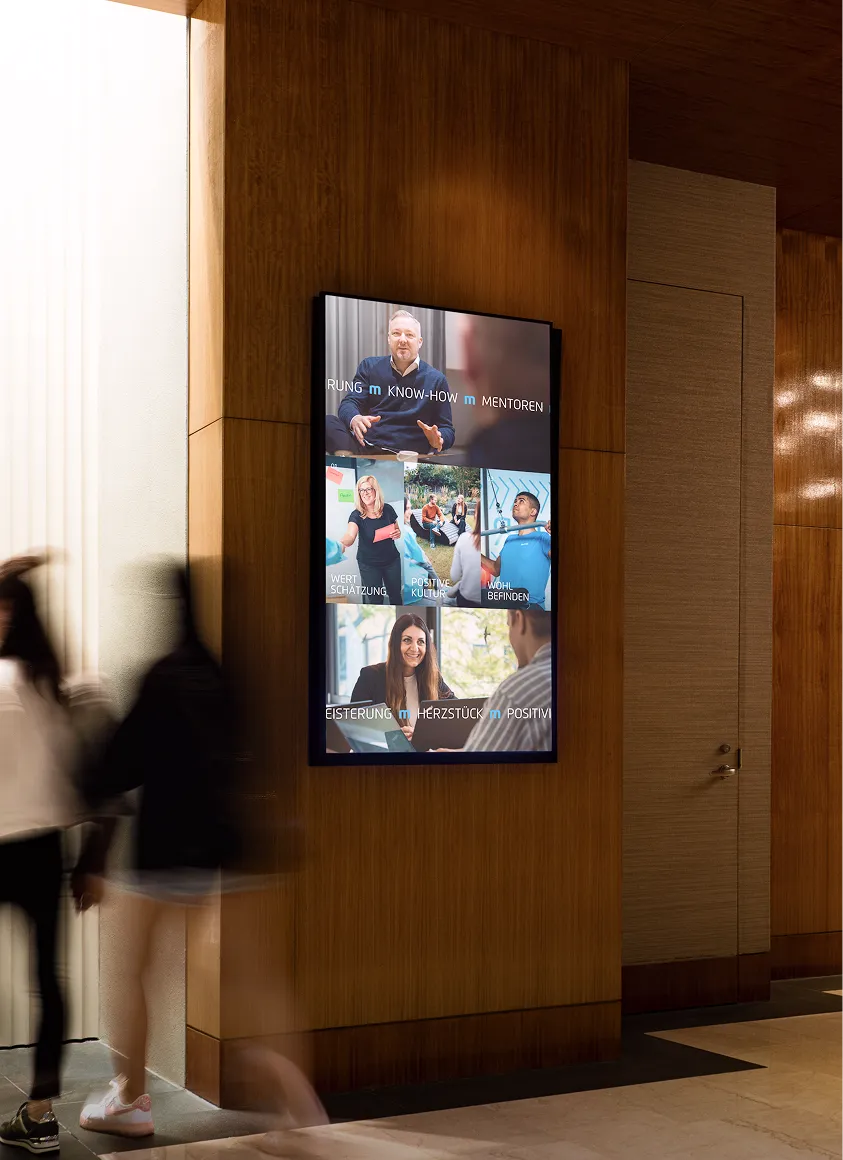
Employer Branding

UX, UI & Design

E-Commerce
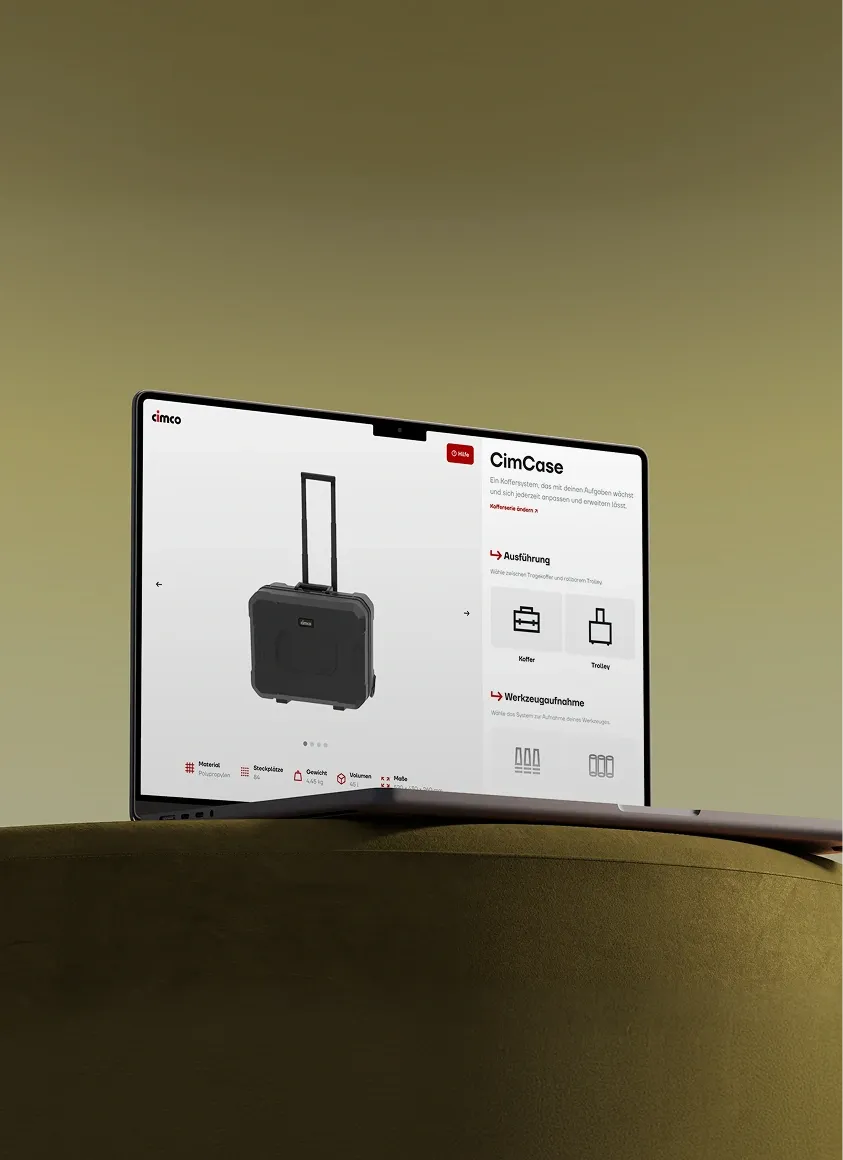
Platforms
APIs & Automation

Content Creation
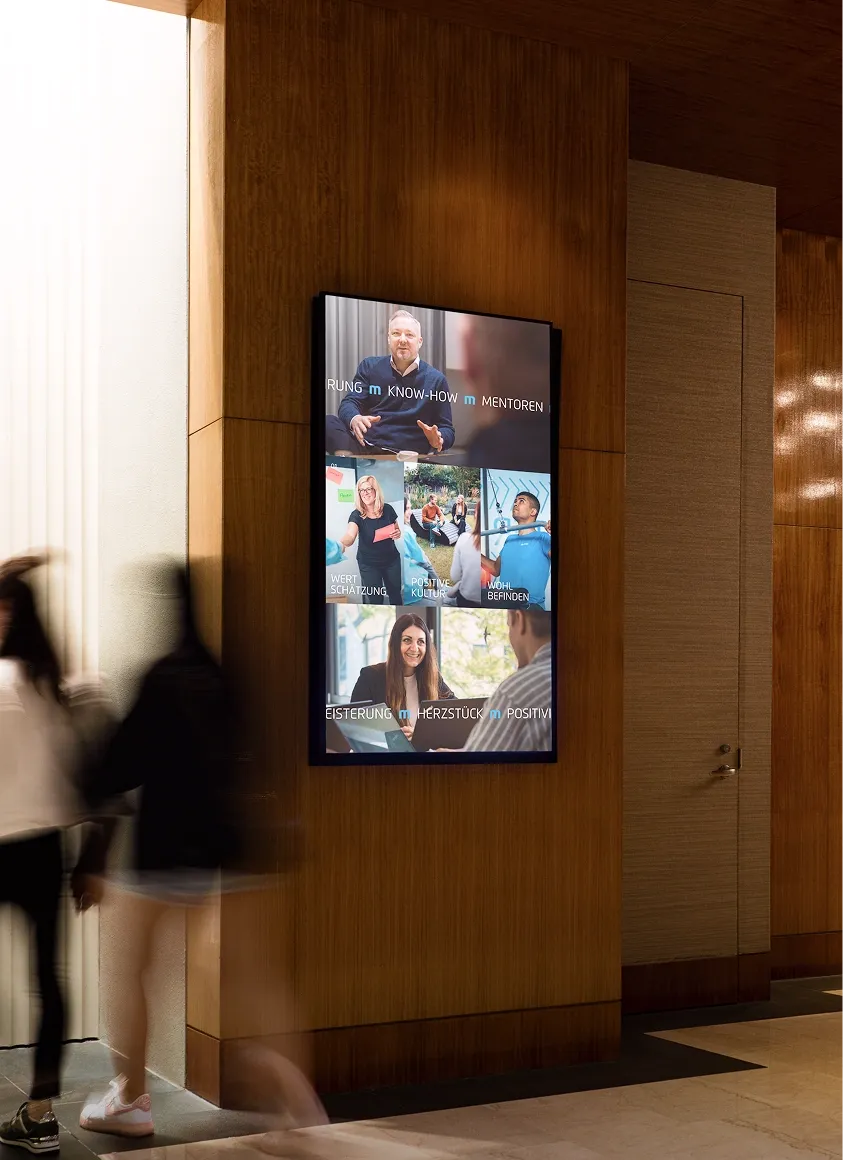
Motion Design

3D & CGI

Photography

Digital Marketing

Ad Creatives
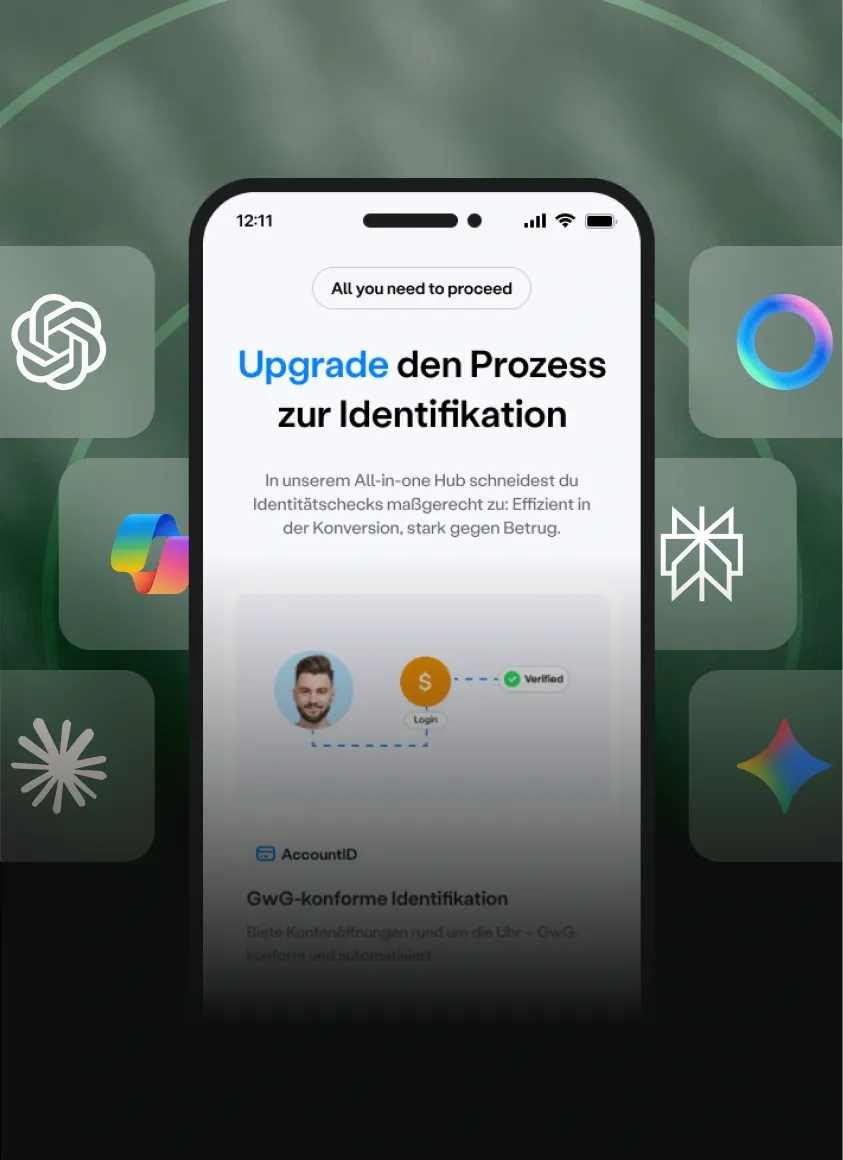
GEO

Social Ads

Copywriting
Architecture & data
TYPO3 in interaction with your systems
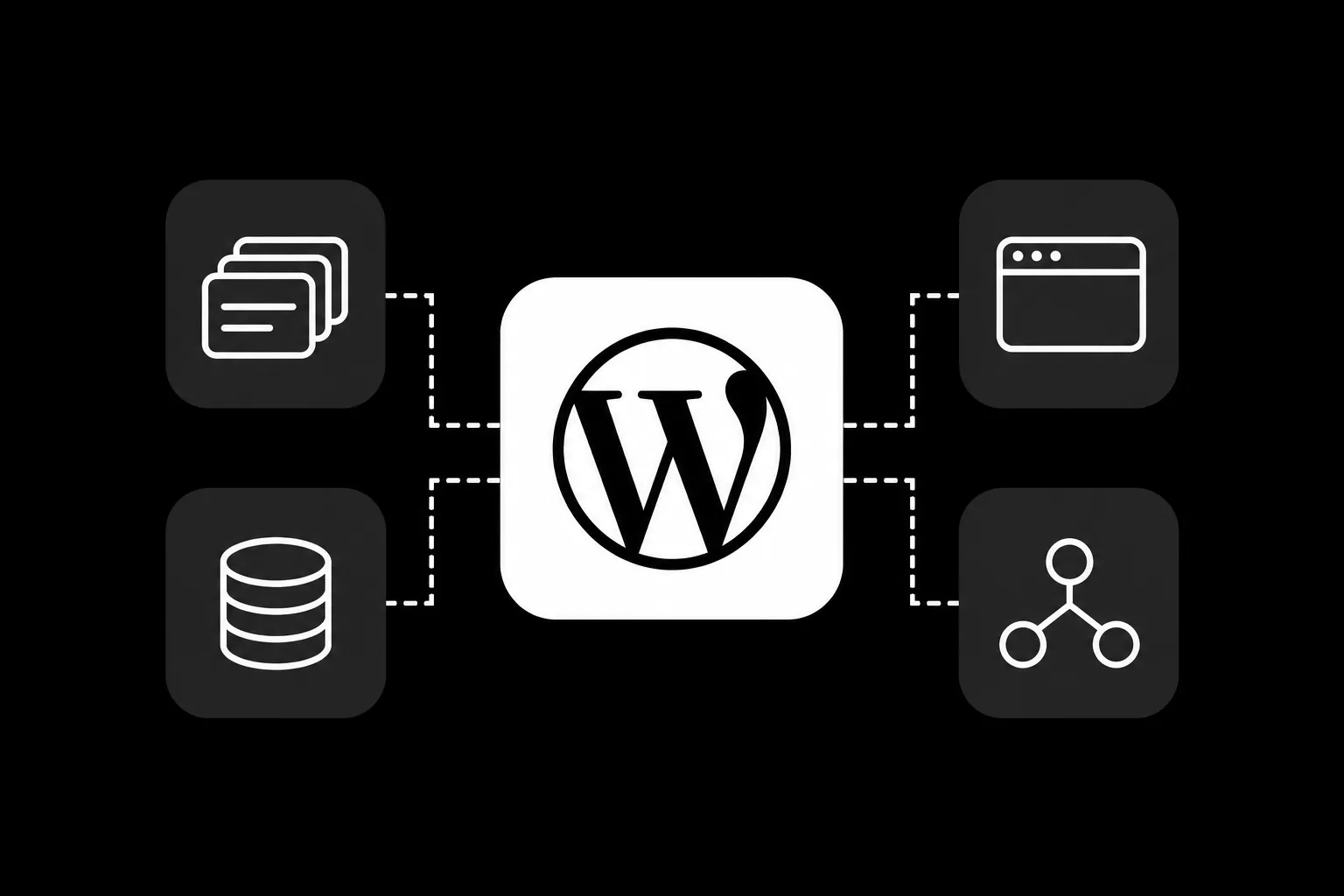
A Digital Experience Platform emerges through suitable building blocks and clear data responsibility. We add only what helps your user journeys and processes.
TYPO3
Page types, content elements and recurring data sets are planned separately. Products, locations and contacts receive suitable relationships. Content blocks or custom extensions complement the model where standard fields are not enough.
Presentation & editing
Editors test content maintenance, preview and approval using their actual tasks. Workspaces and permissions are aligned with this. Field help and prepared content elements keep maintenance understandable.
Data & interfaces
APIs and custom extensions connect systems like PIM, CRM and search with TYPO3. Leading systems, synchronization and permissions are explicitly defined. Large imports require error reports and repeatable processing.
Offers & transactions
TYPO3 can provide product guidance, documentation and brand content. Transactions can take place in a connected shop system. We plan transitions, identities and product identifiers as a coherent user journey.
Languages & markets
Linked translations are suitable for parallel content; independent versions for local differences. Domains, language paths, fallbacks and hreflang must match this. The decision is made per content type and market.
Operation & further development
We jointly plan supported versions, extension compatibility, security updates and the technical environment. Updates are tested in a staging environment. Monitoring, backups and recovery receive clearly defined responsibilities.
»Wir waren mit der Agentur Pechschwarz sehr zufrieden. Wir sind sicher, mit dieser langfristig einen guten E-Commerce- & Shop-Berater an unserer Seite zu haben. Eine starke Full-Service Agentur die tatsächlich alle Bereiche gut abdeckt, sowie durch Kreativität, persönliche Erreichbarkeit und ein gutes Preis-Leistungs-Verhältnis überzeugt.«




Ready for more?




Ready for more?
pechschwarz®
Brand, design and technology. One unified team.
A platform alone does not yet solve any task. We connect brand strategy, user guidance, content and development – with fixed contacts and clear decisions in every phase.
For your TYPO3 project we connect strategy and design with a transparent implementation. You evaluate real content models, prototypes and user journeys. Editorial handover, interfaces and ongoing support are planned together.
Typical applications
TYPO3 for your requirements
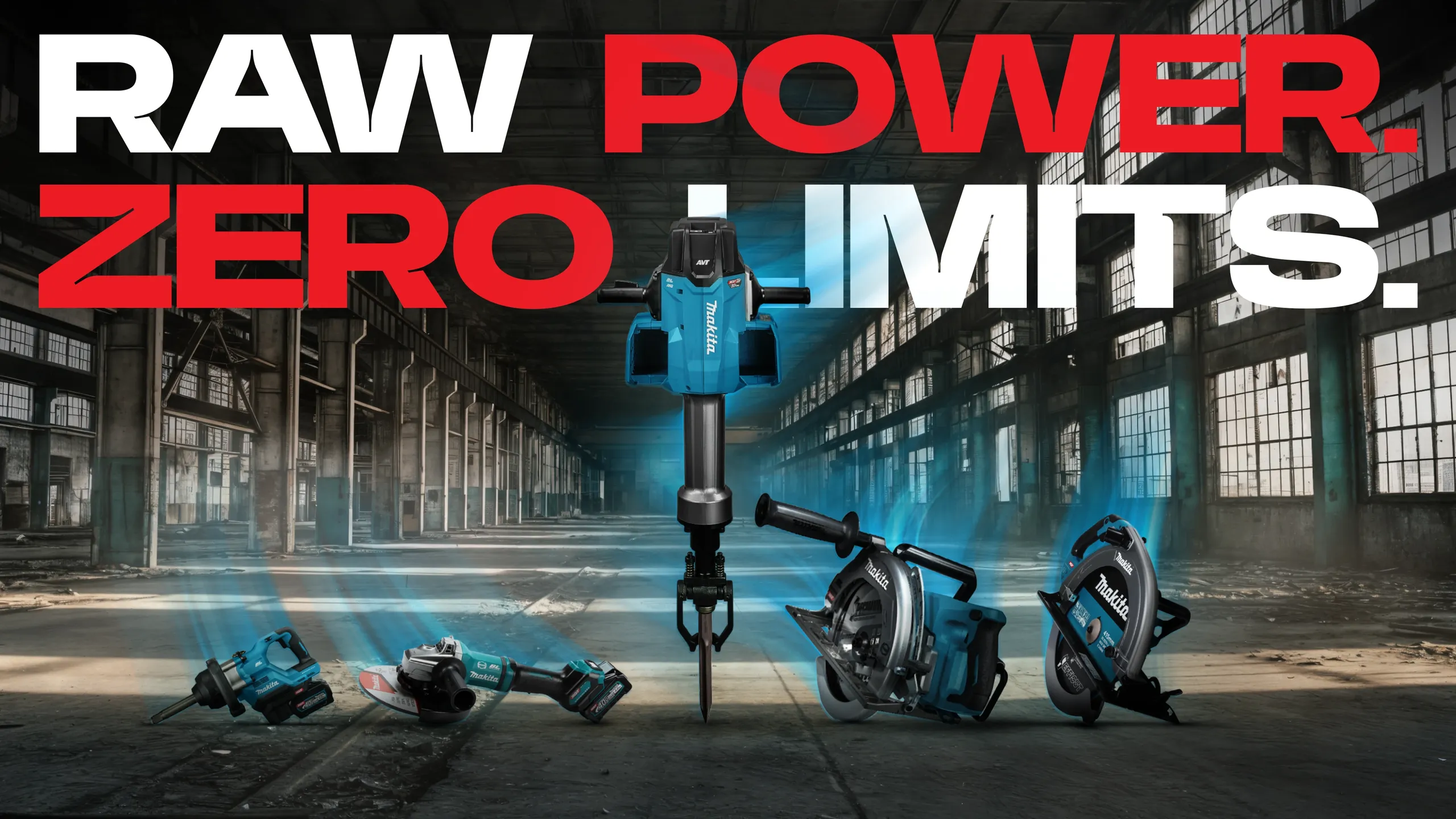
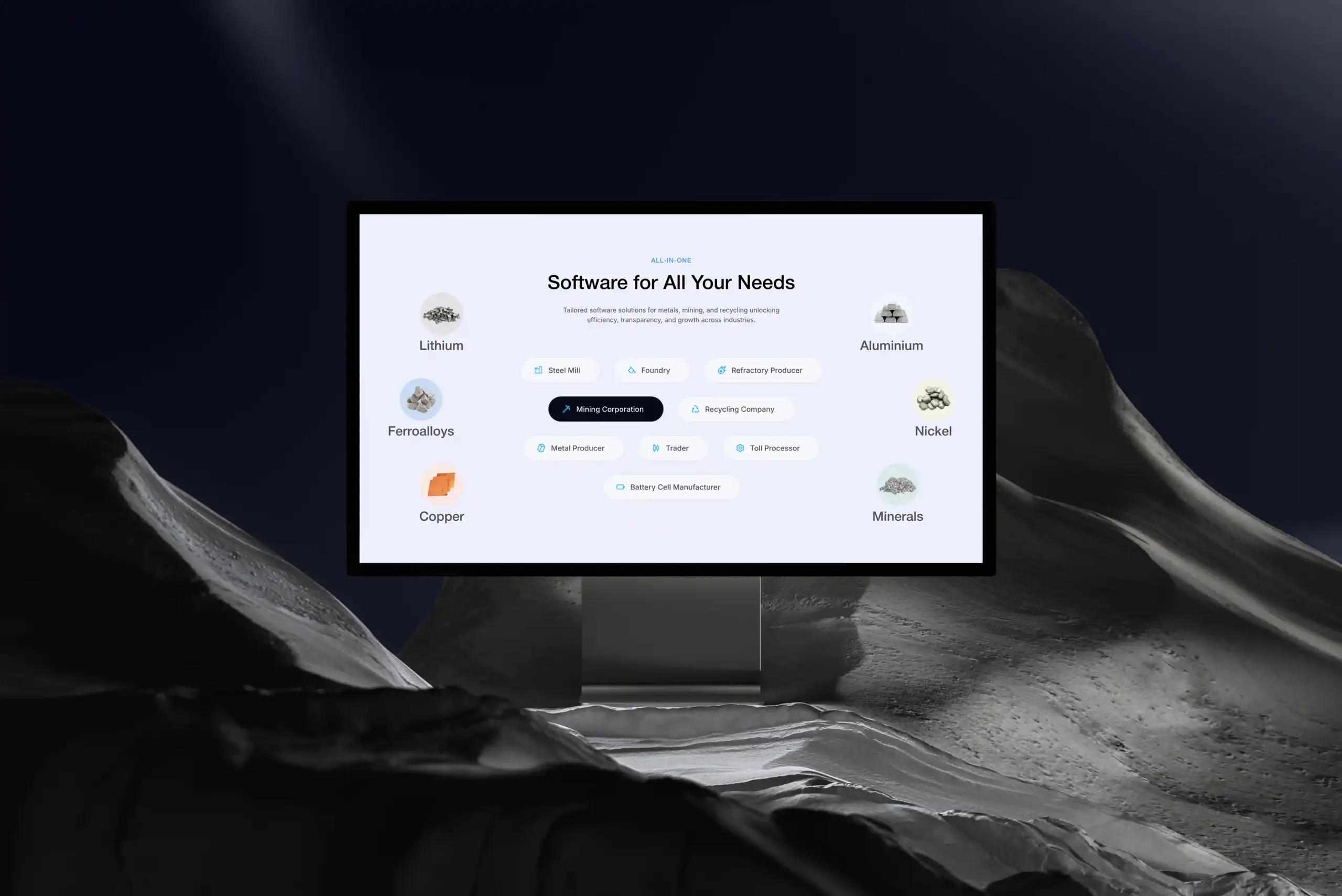
TYPO3 plays to its strengths when content, markets and responsibilities must fit together.
Which solution fits?
Enterprise needs a shared plan.
Which solution fits?
Enterprise needs a shared plan.
TYPO3 with pechschwarz®
Structure, design and operation are developed together.
Uncoordinated organically grown installation
Individual extensions do not yet replace a viable overall concept.
Our process
How your TYPO3 project comes to life
From the first workshop to launch: a dedicated team, clear decisions and shared goals. You know what will be created next.
Goals & current setup
We review target groups, existing content and your day-to-day maintenance. TYPO3 is particularly interesting for larger collections of pages, multiple sites and differentiated editorial permissions. Whether it suits you depends on approvals, integrations and available resources. For a small campaign site, a leaner system may be sufficient.
Concept & architecture
TYPO3 can manage multiple sites in one installation. We jointly plan site trees, shared components and separate responsibilities. Site configuration and Site Sets help organize appropriate settings and dependencies. The central foundation is intended to support local teams: offerings, contacts and editorial responsibilities remain independent where your company needs them to be.
Design & editorial
We design real pages, content and interactions. Your team tests maintenance before the system is expanded to additional page types.
Implementation & transition
We inventory site trees, files, data sets and existing extensions. A trial import checks relationships and language versions. In parallel, URL targets, editorial handover and the update shortly before launch are prepared.
Launch & further development
Acceptance, training and transition interlock. After the start, we prioritize improvements based on your goals and feedback.
TYPO3 pays off when structure is needed
TYPO3 is particularly interesting for larger numbers of pages, multiple sites and differentiated editorial permissions. Whether it suits you depends on approvals, integrations and available resources. For a small campaign site, a leaner system may be sufficient.
An extensive page tree is not yet a good editorial concept. We clarify which units work together and which publish independently. The CMS selection is evaluated against these tasks. Jointly used components and clearly delineated permissions create more value than a long list of installed extensions.
Plan content, data and approvals together
Page types, content elements and recurring data records are planned separately. Products, locations and contacts receive appropriate relationships. Content blocks or custom extensions extend the model where standard fields are not sufficient.
APIs and custom extensions connect systems such as PIM, CRM and search with TYPO3. Leading systems, synchronization and permissions are explicitly defined. Large imports require error reports and repeatable processing.
Ongoing operation is part of the decision
We plan supported versions, extension compatibility, security updates and the technical environment together. Updates are tested in a staging environment. Monitoring, backups and recovery receive clearly defined responsibilities.
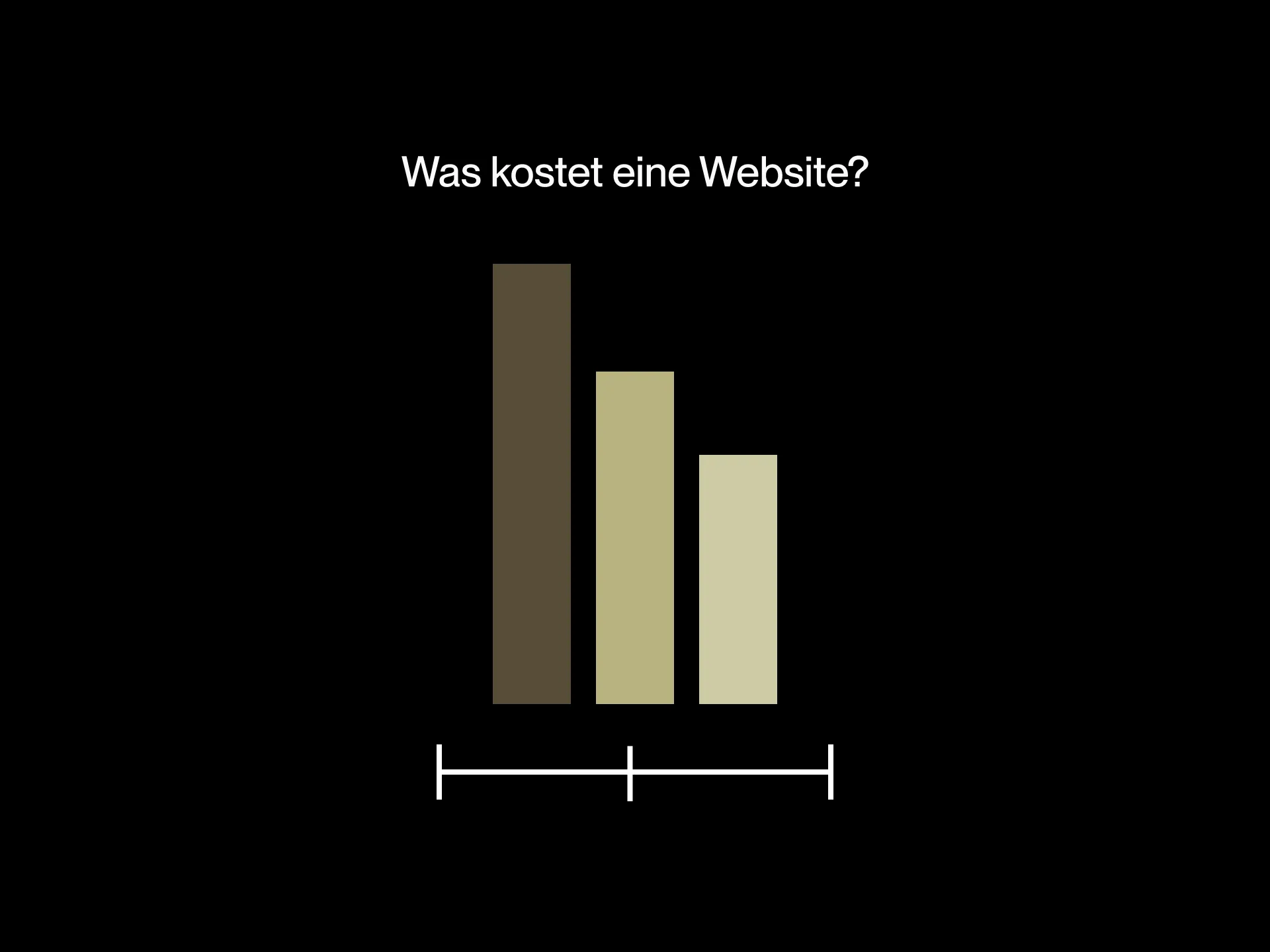
Scope is determined by the page and permission structure, languages, individual content elements, extensions, migration and integrations. Added to this are the required licenses, hosting and support. We separate one-time implementation from ongoing effort and compare the planned expansion over several years.
Knowledge for your digital platform
Use the arrow keys to browse. Home shows the beginning, End the last posts. Use Tab to select post links.



FAQ
Questions about your TYPO3 project
For larger websites, multiple sites and differentiated editorial responsibilities. We assess the benefits in terms of maintenance, approvals and integrations. The number of pages alone is not decisive.
Yes. Multiple sites can use shared foundations. Which content and functions are shared is deliberately modeled; local responsibility remains explicitly regulated.
They allow changes to be prepared separately from the published website. Meaningful roles and approval steps turn this into a reliable workflow.
No. Linked translations and independent local content address different needs. We plan the right combination, including URLs and language links.
After an inventory, modernization, upgrade or relaunch can be planned. We record versions, extensions, content and operations before the right path is determined.
Scope is determined by the page and permission structure, languages, individual content elements, extensions, migration and integrations. Added to this are the required licenses, hosting and support. We separate one-time implementation from ongoing effort and compare the planned expansion over several years.
We inventory page trees, files, data records and existing extensions. A test import checks relationships and language versions. In parallel, URL targets, editorial handover and the update shortly before launch are prepared.
We plan supported versions, extension compatibility, security updates and the technical environment together. Updates are tested in a staging environment. Monitoring, backups and recovery receive clearly defined responsibilities.
Let’s achieve more with TYPO3.